You have just taken a breath. In that single breath came dust particles thirty times finer than a human hair, born of a tailpipe, a coal stove, or a field burning hundreds of kilometers away. You will do it again in a few seconds, and again, until the end. That is the whole genius of this killer: the victim opens the door for it themselves, several times a minute.
Fire made us human. It cooks, it heats, it runs engines, and its smoke has become the leading environmental risk factor for death on the planet. Yet almost nobody dies of it on paper: death certificates say heart attack, stroke, asthma. Fine particulates tell the story of a humanity that learned to fight the smoke it can see, and let the smoke it cannot see run free.
According to a World Health Organization estimate published in 2021, air pollution causes about seven million premature deaths every year: calculated deaths that no death certificate names. It does not choose at random. Nearly nine in ten outdoor air deaths occur in low- or middle-income countries; household smoke strikes first the women and children who live closest to the stove; and everywhere, hearts that are already sick are the most threatened.
A more recent count than the WHO's: the Health Effects Institute tallies 7.9 million deaths in 2023, 86% of them from noncommunicable diseases: heart disease, lung disease, diabetes, dementia
Thirty times finer than a human hair
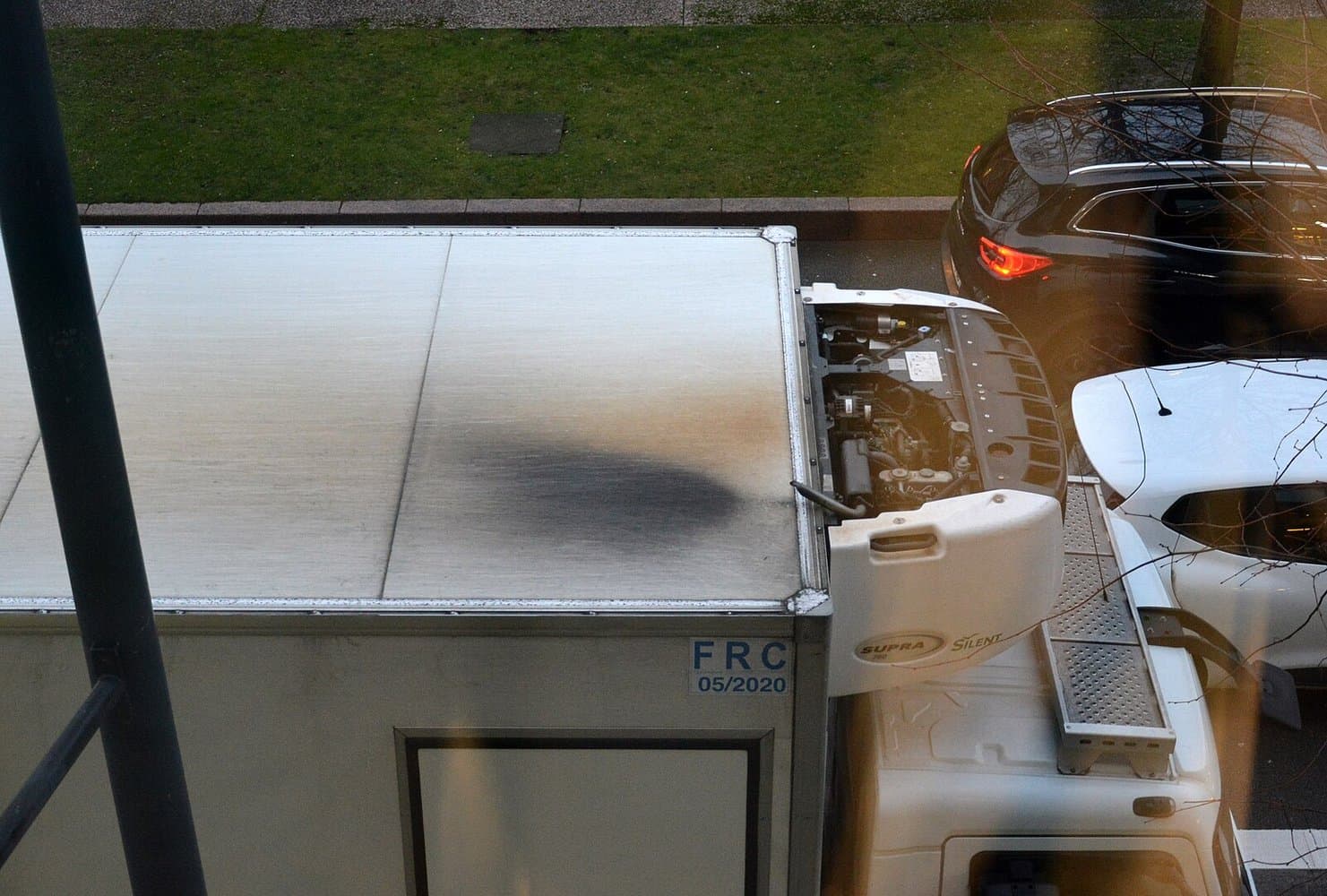
Refrigerated truck idling, Lille, January 2018
Lamiot, Wikimedia Commons
Take one of your hairs and split it lengthwise into thirty strands: each strand would be roughly the width of the largest PM2.5 particles, which measure at most 2.5 micrometers across. At that size, you cannot see them, smell them, or cough them up. The nose and throat stop larger dust particles; the finest ones travel deep into the lungs, and some pass into the bloodstream.
That is where the part nobody notices begins. Once in the bloodstream, the particles reach the heart. They make blood vessels narrower and stiffer, and make the blood more likely to clot. One day, a clot blocks an artery: in the heart, that is a heart attack; in the brain, a stroke.
That is why pollution deaths so rarely look like pollution deaths. According to the WHO, more than two-thirds of deaths from outdoor air come from heart disease and stroke; lung cancer, which comes to mind first, accounts for only a small fraction. You breathe in a tailpipe, and it is your heart that gives out. Since 2010, the American Heart Association has judged the evidence "consistent with a causal relationship."
Ischemic heart disease and stroke; chronic obstructive pulmonary disease and respiratory infections account for 14% each, lung cancer 4% ⧉ [WHO](https://www.who.int/news-room/fact-sheets/detail/ambient-(outdoor)-air-quality-and-health)
The yellow fog, then the clear air
Air deaths were visible at first. In December 1952, a fog thick with coal smoke blanketed London for five days. At the time, it was blamed for about 4,000 deaths; a 2001 study counted nearly 12,000 excess deaths through February 1953. The United Kingdom passed its Clean Air Act in 1956. People had seen the killer, and they drove it out.
The most unsettling discovery still lay ahead: air that kills can look crystal clear. In 1993, US researchers published a follow-up of 8,111 adults across six cities over fourteen to sixteen years. With smoking and other risks held equal, mortality was a quarter higher in the most polluted city than in the cleanest, and the strongest link was to fine particulates.
The US Environmental Protection Agency set its first standard for PM2.5 in 1997, and every revision since has lowered the bar. In 2021, the WHO cut its annual guideline value in half, from 10 to 5 micrograms per cubic meter. By that standard, almost all of humanity lives out of compliance: 99% of the world's population breathes air that exceeds WHO limits. The remaining 1% has not come forward.
More than 6,000 cities across 117 countries were monitoring their air in 2022: the question is no longer who is exposed, but who is not
Diesel, or how to save the ice cap by suffocating the stroller
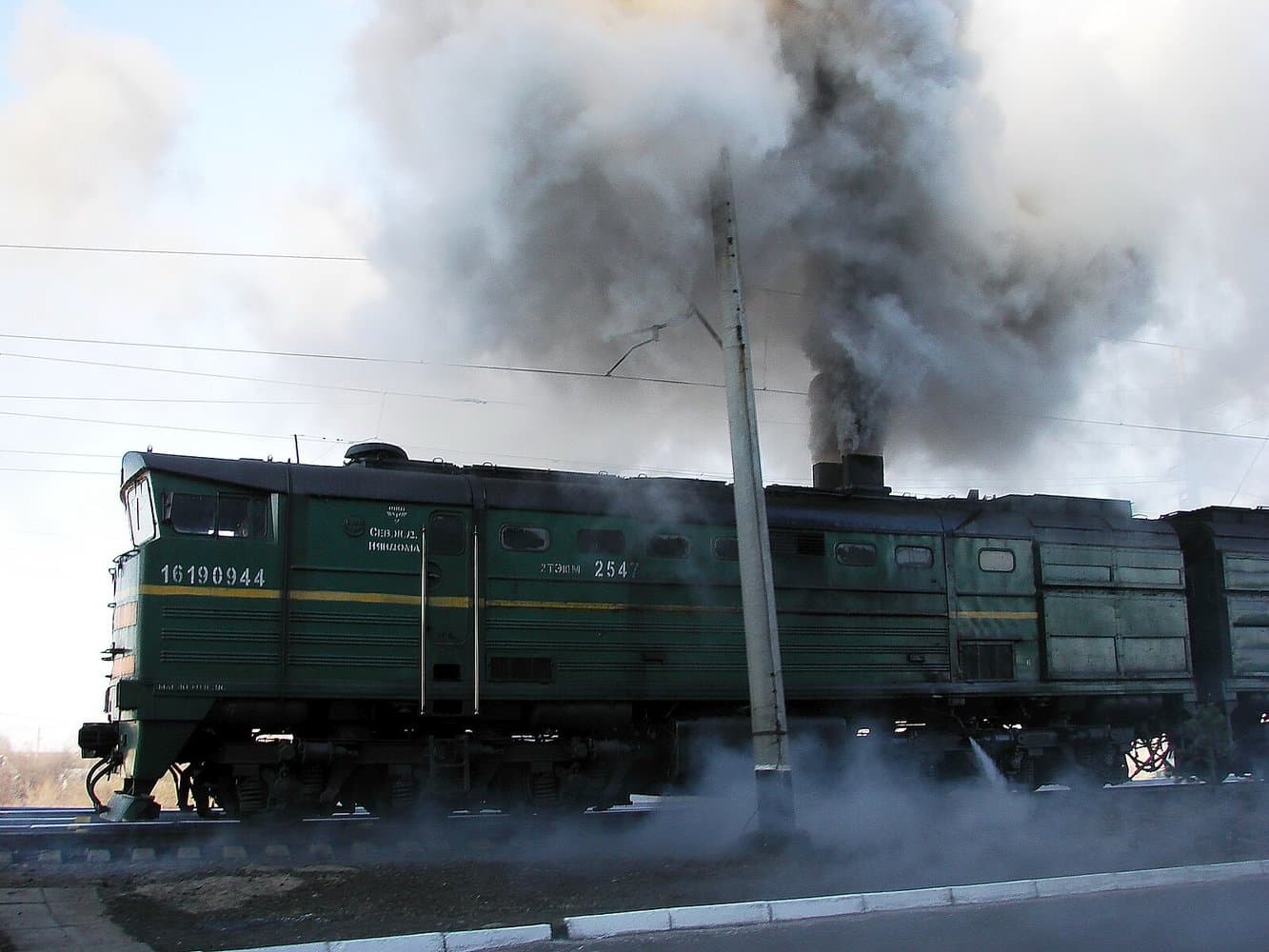
Diesel locomotive billowing smoke
Sergeev Pavel, Wikimedia Commons
In 1997, the year of the first US standard on fine particulates, the Kyoto Protocol made carbon dioxide public enemy number one. And a diesel engine burns less fuel and emits less CO2 per kilometer than a gasoline engine. Europe had already formed the habit: lower fuel taxes on diesel at the pump, lighter ownership taxes for cars emitting less CO2. In Western Europe, diesel rose from just over one in five new cars in 1994 to one in three in 2000.
The arithmetic had an accountant's elegance. To save the ice cap for our great-grandchildren, we released soot and nitrogen oxides at the exact height of baby strollers, and those oxides turn into fine particulates in the air. Governments presented handsome carbon balance sheets at international summits, and the bill arrived in heart attacks.
Only the cheating was missing. In September 2015, the US Environmental Protection Agency accused Volkswagen: software recognized emissions tests and switched on full pollution controls only while being tested. On the road, the cars emitted up to forty times the permitted nitrogen oxides. Not only was diesel poisoning people, it was lying about the dose: a lose-lose transaction of absolute purity.
Delhi, Beijing, Krakow, New York :four ways to suffocate
In New Delhi, winter has a smell. From November to February, car exhaust, construction dust, and burning trash stagnate over the city, and the northwest wind adds smoke from the fields of Punjab and Haryana, where farmers burn crop stubble: most say they have no other way to prepare for the next harvest. In 2019, air pollution killed 1.67 million people in India, more than one in six deaths in the country. A resident of Delhi breathes air nearly eighteen times more polluted than the WHO guideline value; at that rate, they lose eight years of life expectancy, according to the University of Chicago.
Beijing, for its part, had an official whistleblower. In November 2010, the US Embassy monitor posted a reading on Twitter beyond the top of the American scale, capped at 500, with a label the scale had never planned for: Crazy Bad. In January 2013, the same monitor hit 755 on a scale meant to stop at 500. In September, the government launched its antipollution plan: more than a thousand heavily polluting factories to be shut down in Beijing, less coal, old vehicles sent to the scrapyard.
In the winter of 2017, in neighboring Hebei, one village saw all its coal stoves destroyed; elsewhere, schools were left without heat, and teachers held classes outdoors in the sun. In early December, the Environment Ministry reauthorized coal where nothing was ready to replace it. By 2023, the municipality announced that fine particulates had fallen by 64% since 2013, even though the air there remains six times above the guideline value. Authoritarianism, it turns out, is an excellent remedy against fine particulates; against the cold, much less so.
Krakow, the city of the fire-breathing dragon, long lived in the smoke of its stoves. In southern Poland, many homes heat with coal in winter using old boilers that Poles call kopciuchy, roughly "soot-belchers." In September 2019, the city banned coal and wood for heating: fines of up to 5,000 zlotys, inspectors equipped with a drone and a thermal camera, and the ban extended to built-in barbecues, with portable grills spared. Ranked three years earlier among the European Union's ten most polluted cities, Krakow was down to twentieth by 2024; nationwide, however, Poland still counted about 25,000 deaths attributable to fine particulates above the WHO guideline value in 2023, according to the European Environment Agency.
Across the European Union as a whole, the same agency counted 182,000 deaths in 2023 attributable to fine particulates above the WHO guideline value; that number has fallen by 57% since 2005. In mainland France, Santé publique France estimated in 2021 that nearly 40,000 deaths a year were attributable to PM2.5, based on 2016-2019 concentrations; an earlier study had counted 48,000 for 2007-2008.
The first lockdown provided the experiment nobody would have dared commission. According to the same agency, the drop in pollution observed in the spring of 2020 prevented roughly 2,300 deaths linked to PM2.5. The country stopped for a few weeks, and the air gave lives back.
The West, which thought it had settled its smog problem, received a reminder in June 2023. Smoke from wildfires in Quebec drifted down over the northeastern United States, and on the night of June 6 to 7, New York had the most polluted air of any major city in the world. By morning, Delhi had reclaimed its title, though that did not stop the air quality index from briefly topping 400 in parts of New York. We thought we had exported our smoke; the forests took it upon themselves to send it back by express mail.
The kitchen fire
The other pollution, the one inside homes, does not make television news. It fits in a single room: an open fire or a leaky stove, wood, charcoal, crop waste, dried dung, or kerosene, and a cooking pot. Around 2.1 billion people still cook this way, according to the WHO, most of them poor and living in low- or middle-income countries. In a poorly ventilated house, the smoke can contain a hundred times more fine particulates than the acceptable level.
Those most exposed are the people who spend their days by the fire: the women who prepare the meals and the young children who stay beside them. They are also the ones who gather the fuel. According to the WHO, household smoke caused 2.9 million deaths in 2021, first from heart attacks and strokes, then from respiratory infections, chronic obstructive pulmonary disease, and lung cancer. It is involved in nearly half of all deaths from lower respiratory infections among children under five.
The toll on children does not stop at the kitchen. The State of Global Air 2024 report, published by the Health Effects Institute with UNICEF, links air pollution to more than 700,000 deaths of children under five in 2021. That is 15% of all deaths of children of that age worldwide.
The day the air appeared on a death certificate
For decades, pollution killed without signing its name. On death certificates, one read cardiac arrest, respiratory failure, asthma. Nobody had ever died "of pollution."
Ella Adoo-Kissi-Debrah lived in Lewisham, in southeast London, twenty-five meters from the South Circular, one of the capital's busiest roads. Her asthma was severe: between 2010 and 2013, she was rushed to the hospital nearly thirty times. She died in February 2013, at age nine. In 2014, a first inquest concluded that she had died of acute respiratory failure caused by severe asthma.
Her mother, Rosamund, refused to leave it there and fought for a new inquest. A report by Professor Stephen Holgate noted a "striking association" between Ella's emergency hospital admissions and spikes in nitrogen dioxide and particulates measured near her home. In 2019, the courts ordered a fresh inquest.
In December 2020, assistant coroner Philip Barlow concluded that "Ella died of asthma contributed to by exposure to excessive air pollution." The government had failed to bring nitrogen dioxide down within the limits set by law, which may have contributed to her death; particulate levels exceeded WHO guidelines; and nobody had told her mother that air pollution could worsen her daughter's asthma. For the first time in the United Kingdom, air pollution was listed among the causes of a death. It took nearly eight years and two inquests for a single phrase to be added to a certificate.
And now, take a breath
We fear what we can see: the terror attack, the plane crash, the shark. Terrorism killed 5,582 people worldwide in 2025; air pollution kills more than three times that many every single day, without a moment of silence. Road traffic kills about 1.16 million people a year, and for that we at least fasten our seatbelts.
The true face of the reaper (Deaths/year)
deathsThe good news fits in three cities: London, Beijing, and Krakow drove their smoke back when they decided to. The bad news: every time, the smoke had to be visible first.