
There is no more exclusive club: you can only get in by dying, and only during your twenty-seventh year. Brian Jones was found at the bottom of his swimming pool in July 1969. Jimi Hendrix choked on his own vomit, under the influence of barbiturates, in September 1970; Janis Joplin died of a heroin injection in a Hollywood motel two weeks later. In July 1971, Jim Morrison was found dead in a Paris bathtub.
Twenty-three years passed. Kurt Cobain died by suicide in April 1994, and Amy Winehouse died at her home in London in July 2011, surrounded by empty vodka bottles. All of them were 27.
The 27 Club is the only curse with its own section in record stores. It says less about how musicians die than about how we remember them: we prefer a destiny to a medical file, a fateful age to an overdose. The statisticians who put the club to the test found no curse. They found something less romantic and more serious: famous musicians die at higher rates than the rest of us throughout their youth, and no more at 27 than at 25 or 32.
No curse, but seven Muppets
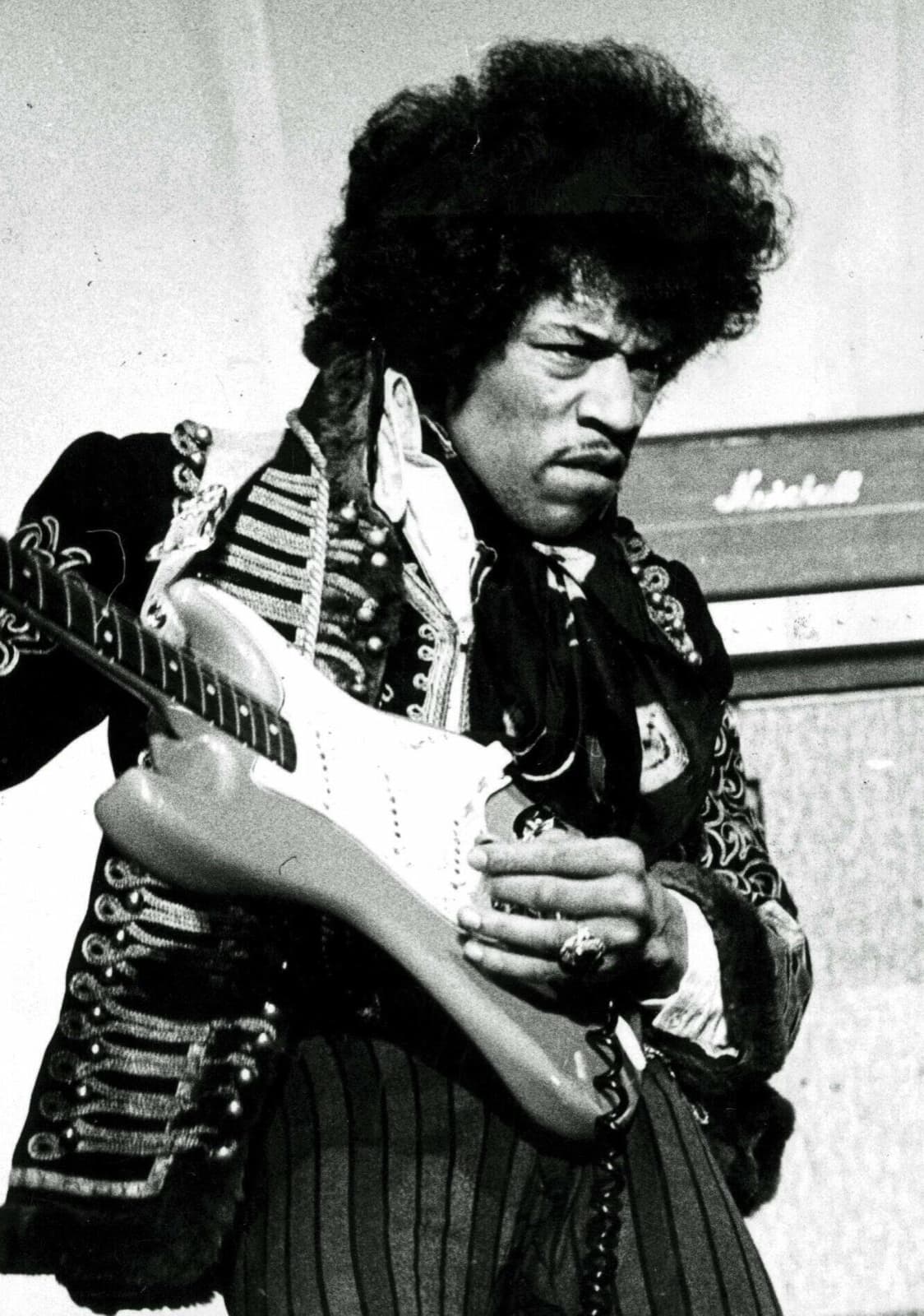
Jimi Hendrix at Gröna Lund amusement park in Stockholm, May 24, 1967
public domain
To test a curse, you need a list that nobody has hand-picked. In 2011, a few weeks after Amy Winehouse's death, a team of health statisticians led by Martin Wolkewitz and Adrian Barnett took a ready-made one: every musician, solo artist or band member, who had a number-one album in the United Kingdom between 1956 and 2007. There were 1,046 of them; by the summer of 2011, 71 had died.
The criterion has its gaps. Hendrix, Joplin, and Morrison never had a number-one album in Britain between 1956 and 2007, leaving three of the club's founders outside the door. Writing in the Christmas issue of the British Medical Journal, the authors admitted it with deadpan composure: "Although we only captured three of the seven famous 27 club members, we did capture seven Muppets." The puppets, for their part, had scored a number-one album.
The sample's three deaths at age 27 fell in 1969, 1994, and 2011 — the years of Brian Jones, Kurt Cobain, and Amy Winehouse. Divided by the musicians who reached that age, they yield a mortality rate almost identical to those at ages 25 and 32. The researchers plotted the risk of dying, age by age, using a curve flexible enough to let a bump at 27 show through: the curve stayed flat. The club, they concluded, was created by a combination of chance and cherry-picking.
Yet the same study reveals something less comforting. Throughout their twenties and thirties, famous musicians face two to three times the risk of dying compared with British people of the same age. Fame kills; it simply does not check the calendar.
Or 0.57 deaths per 100 musician-years (one musician-year: one musician followed for one year), compared with 0.56 at age 25 and 0.54 at age 32
Painting the target around the bullet holes
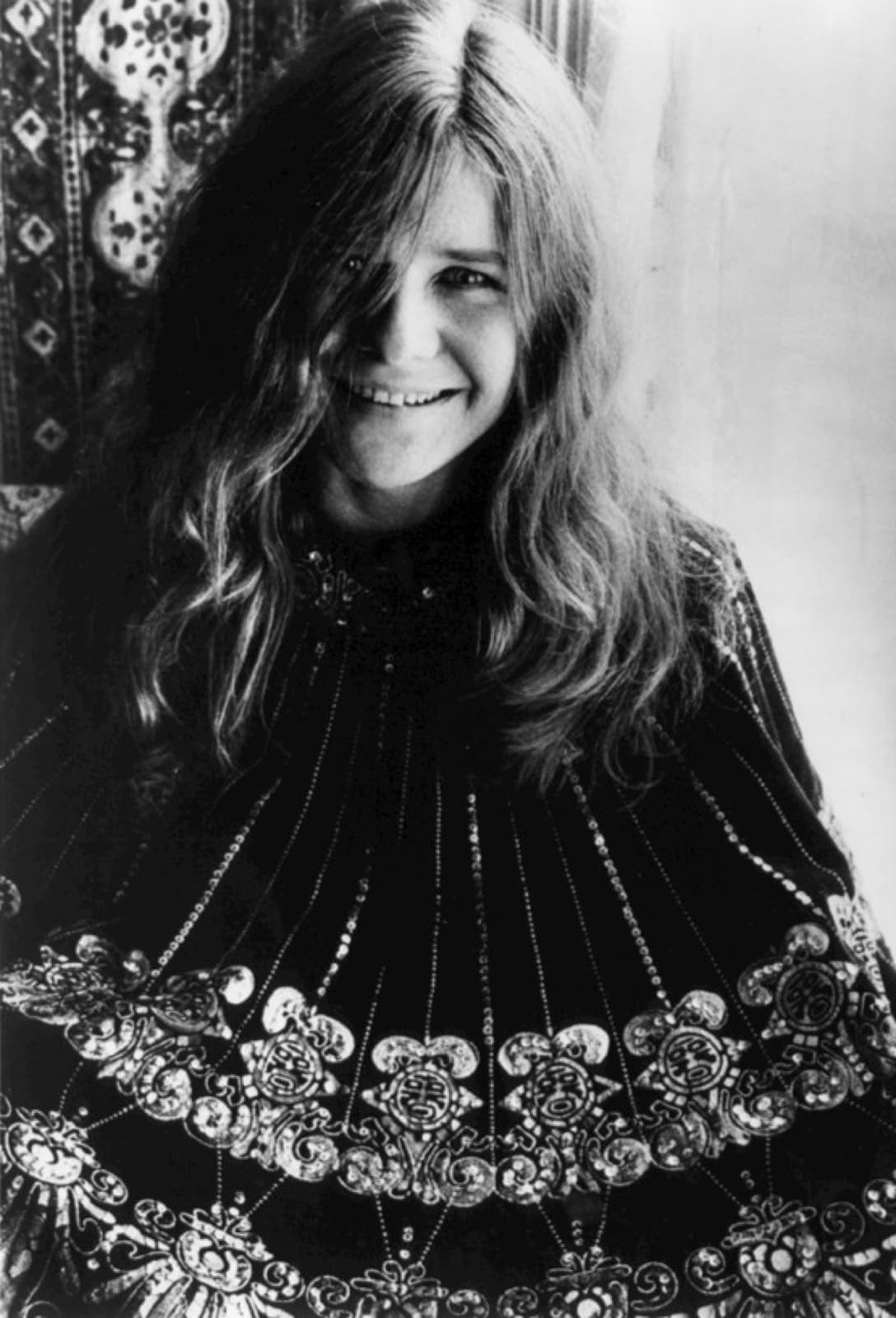
Janis Joplin, promotional photograph (circa 1969)
public domain
Logicians have an image for this kind of club: the Texas sharpshooter. A man empties his shotgun at random into the side of a barn, spots the place where a few pellets happened to cluster, and paints a bull's-eye around them. The next day's visitor admires a master marksman.
The 27 Club was painted the same way. The four deaths from 1969 to 1971 formed the cluster of pellets; the target arrived in 1994. After Kurt Cobain's death, his mother told The Daily World, the newspaper in Aberdeen, Washington: "Now he's gone and joined that stupid club. I told him not to join that stupid club." The Associated Press picked up the sentence. No one knows for certain which club she was talking about; the press chose its own.
From then on, every death at 27 made the front page under the banner of the club, and every death at 26 or 28 lost its age in the obituary. Otis Redding was 26 when his plane crashed into a Wisconsin lake; Tim Buckley was 28 when heroin killed him. No club claims them.
Dianna Kenny, a psychologist at the University of Sydney, ran the numbers in 2014 on more than 11,000 popular musicians who died between 1950 and 2010 and whose age at death was known. In her database, 144 were 27 years old, and 153 were 28. The 28 Club has more members; it has never sold a single T-shirt. The age at which the largest number died in her data was 56, and it has never inspired a song.
In 2024, two sociologists, Zackary Dunivin and Patrick Kaminski, finally measured the paint job. In the Proceedings of the National Academy of Sciences, they examined 344,156 notable individuals with a Wikipedia page, born after 1900 and dead before 2015, using page visits as a proxy for fame. Dying at 27 was no more common there than dying at 26 or 28. Among the most famous, however, those who died at that age received an extra boost in attention that no other factor could explain.
The initial cluster of pellets — four superstars dead at 27 within two years — had, by their calculation, a one in 100,000 chance of happening: a rare fluke, not a law. After that, the legend did the work on its own. People click on members of the club because they are in the club, and those clicks make them more famous still. The curse does not make people die at 27; it makes those who die there better known.
The deaths that forged the myth of the 27 Club
1969—Brian Jones
Brian Jones (Rolling Stones) found dead in his swimming pool in Hartfield
Lined up from age 21 to age 28, rock's young dead show the sorting at work: only those who died at 27 get a club.
| Artist | Age at death | Cause of death | In the club? |
|---|---|---|---|
| Sid Vicious | 21 | Heroin overdose in Manhattan | No |
| Buddy Holly | 22 | Plane crash in Iowa | No |
| Ian Curtis | 23 | Suicide | No |
| Notorious B.I.G. | 24 | Shot dead in a car in Los Angeles | No |
| Tupac Shakur | 25 | Shot dead in a car in Las Vegas | No |
| Otis Redding | 26 | Plane crash in Lake Monona (Wisconsin) | No |
| Gram Parsons | 26 | Morphine and alcohol overdose | No |
| Jimi Hendrix | 27 | Asphyxiation from inhaling vomit | Founding member |
| Kurt Cobain | 27 | Suicide | The one whose death gave birth to the club |
| Amy Winehouse | 27 | Acute alcohol poisoning | Last major inductee |
| Tim Buckley | 28 | Heroin overdose | No |
| Avicii (Tim Bergling) | 28 | Suicide | No |
| Shannon Hoon (Blind Melon) | 28 | Cocaine overdose on the tour bus | No |
The real danger has no favorite age
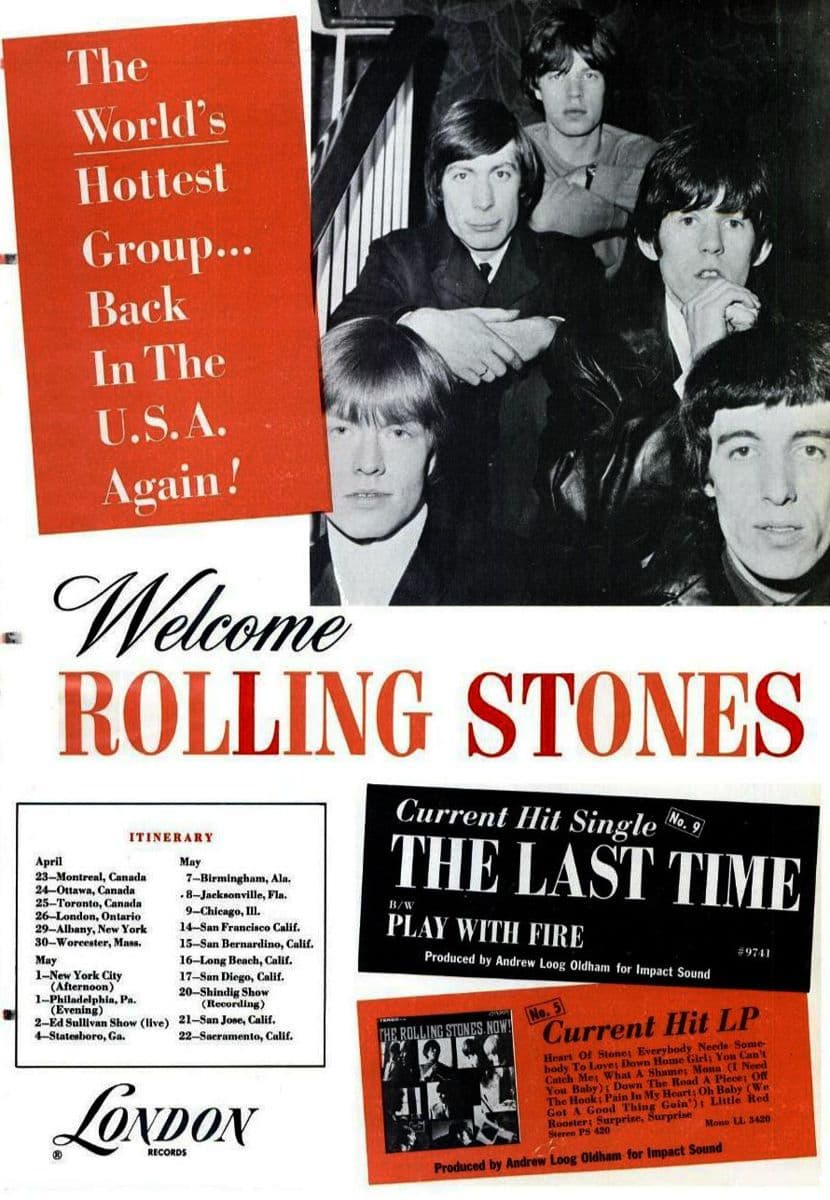
London Records advertisement for the Rolling Stones' North American tour, published in Billboard on May 1, 1965 : eighteen dates in one month, from Montreal to Sacramento, plus two television appearances; in the foreground on the left, Brian Jones, who died at 27 in 1969
London Records, public domain
If the date is an illusion, the danger has faces. In 2012, Mark Bellis's team followed 1,489 European and North American rock and pop stars who became famous between 1956 and 2006: 137 had died. Solo artists died at roughly twice the rate of band members, and the authors wondered whether a band also serves as mutual support. North Americans died at higher rates than Europeans, whose excess risk began to subside twenty-five years after fame.
Behind many graves lies a childhood: beatings, sexual abuse, an ill or substance-dependent parent, a separated family. Among deceased stars who had experienced at least two of those wounds, eight in ten deaths were linked to drugs, alcohol, suicide, violence, or risk-taking. For the authors, those excesses may be rooted in childhood, rather than serving as symbols of success. The other study, in the BMJ, points to what rock adds to childhood: a lifestyle in which alcohol and drugs drive up the risk of accidents and overdoses.
Amy Winehouse did not die of turning 27. Her blood contained more than five times the legal drink-driving limit in the United Kingdom. In January 2013, coroner Shirley Radcliffe recorded a verdict of accidental death: she had drunk of her own accord, "a deliberate act that took an unexpected turn."
In North America, 22.8% of solo artists had died, compared with 10.2% of band members
416 mg per 100 ml of blood, where British law stops drivers at 80 (coroner's inquest, 2013)
The number that counted only the dead
The real danger is easy to inflate, and it was the very researcher who had buried the 27 Club who did so. In October 2014, Dianna Kenny published a study in The Conversation covering her entire database, nearly 13,000 popular musicians who had died since 1950, whether their age was known or not: their lifespans, she wrote, were "up to 25 years shorter" than those of the comparable US population. The figure went around the world.
Carl Bergstrom and Jevin West, at the University of Washington, turned it into a textbook case on their Calling Bullshit site. The study counts only the dead. Rap and hip-hop were not yet forty years old: most of their stars were still alive, and the only ones who had already died had necessarily died young. Blues and jazz had had time to let their musicians grow old, and in Kenny's own data they lived roughly as long as Americans born in the same year.
Comparing those genres is like judging a race by looking only at the runners who dropped out. Rap certainly has its violent deaths, since half of its deaths in Kenny's file are homicides; what it lacked was simply its old men.
A curse that knows how to read a chart
Eight days after Amy Winehouse's death, her album Back to Black climbed back to number one on the UK album chart. Within the following month, it became, at the time, the best-selling album of the century in Britain.
The 27 Club does the same thing for all its members: it turns death into a hit. It takes deaths that had causes — heroin, vodka, a damaged childhood, the loneliness of the solo performer, distress — and gives them a destiny. A destiny sells better than a medical file, and it has another advantage: nobody is responsible for it, neither the manager, nor the record label, nor the audience that kept asking for more.
The statisticians did not find the age that kills. They found a profession that kills throughout youth, and an audience that remembers it only at 27.
The 27 Club has never killed anyone: it only taught our memory to count to twenty-seven
Need help. If you are having suicidal thoughts, or if you are worried about someone close to you, call 3114, the national suicide prevention number: free, available 24/24 and 7/7, everywhere in France. In case of immediate danger, call 15 or 112.