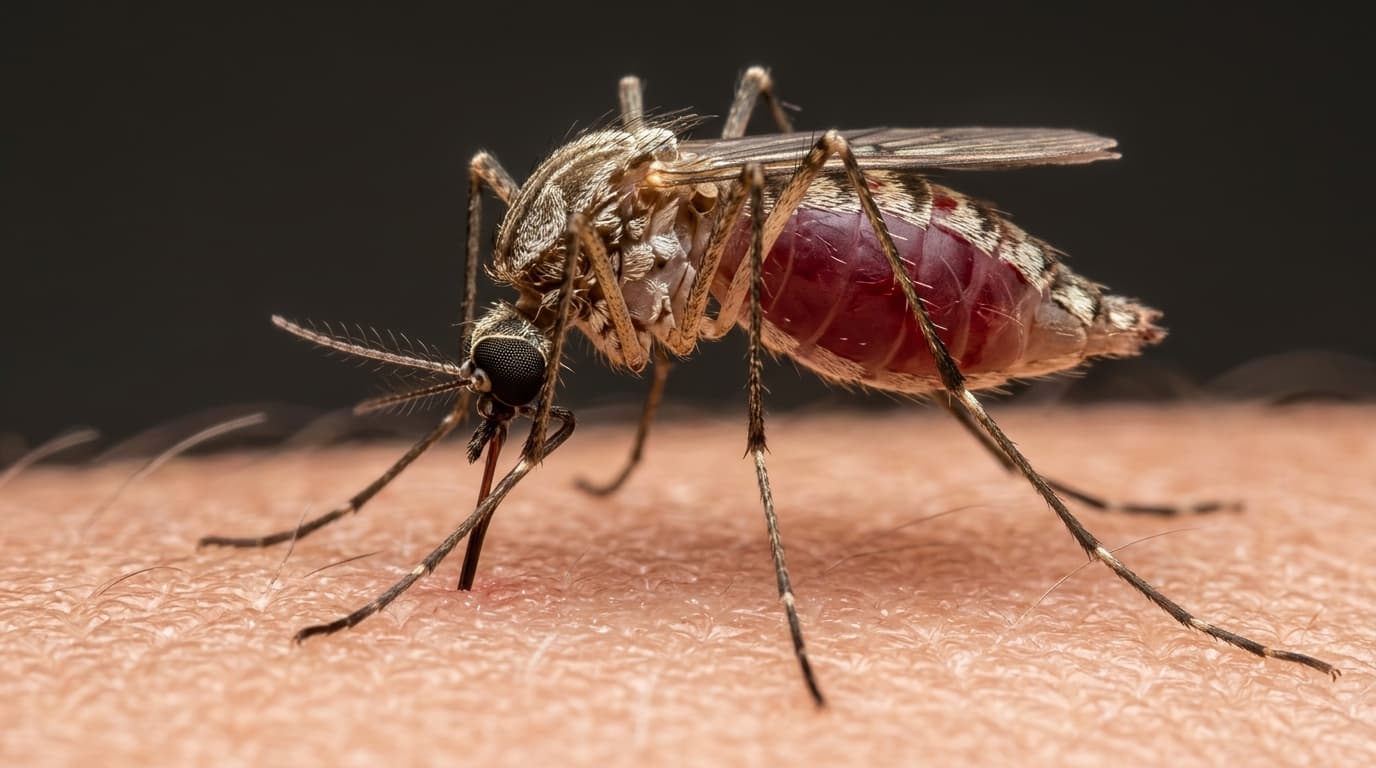
We fear what has teeth. The shark and the wolf have made the fortune of legends and of Hollywood, and they kill almost nobody. The animals that actually kill us do not eat us: they pass along a parasite or a virus, or they bite a farmworker in his field.
Their victims are children in Africa, peasant farmers in Asia, poor families in Latin America: people who lacked a bed net, a vaccine, or a vial of antivenom. The ranking of killer animals is first and foremost a map of what is missing.
According to Our World in Data, other animals kill nearly one million people a year, and the vast majority of those deaths come down to two creatures: the mosquito and the snake.
| Animal | Human deaths per year (estimate) | What kills |
|---|---|---|
| Mosquitoes (Anopheles, Aedes) | roughly 760,000 (2023) | Malaria, dengue, yellow fever, and other vector-borne diseases |
| Humans | roughly 600,000 (2023) | Homicides and conflicts |
| Venomous snakes | 81,000 to 138,000 | Envenoming |
| Dogs | roughly 40,000 (2023) | Rabies, for the most part |
| Freshwater snails | roughly 14,000 | Schistosomiasis (bilharzia) |
| Triatomine bugs ("kissing bugs") | more than 10,000 | Chagas disease |
| Scorpions | more than 3,250 | Envenoming (2008 estimate) |
| Elephants | 628 in India alone (2023) | Attacks |
| Sharks | 9 deaths in unprovoked attacks in 2025 (12 counting all shark-related deaths) | Bite |
| Wolves | 26 fatal attacks worldwide from 2002 to 2020 | Bite, from a rabid wolf in more than half of cases |
The rows can be compared only in order of magnitude: sources and years differ, and the bottom of the table counts a single country, a single year, or nineteen years at once.
At the Bottom of the Ranking :Movie Monsters
The shark. In 2025, the University of Florida's International Shark Attack File counted nine deaths in unprovoked attacks across the entire planet. Three were Australian surfers killed by white sharks. The same registry ran the numbers for the United States: an American is more likely to die from fireworks than from a shark. The Fourth of July is more dangerous than Jaws.
The wolf. A Norwegian inventory of wolf attacks found only twenty-six fatal attacks worldwide over nineteen years, fourteen of them caused by rabid wolves. The risk, the report concludes, is "above zero, but far too low to calculate." Little Red Riding Hood can walk through the woods; she would do better to watch out for her grandmother's dog.
The elephant and the hippopotamus. The hippopotamus, a staple of "deadliest animals" lists, kills far fewer people than elephants or big cats, according to Our World in Data. Elephants, for their part, killed 628 Indians in 2023, according to figures presented to Parliament.
The crocodile and the hippopotamus. The crocodile is the great missing entry in numerical rankings, for lack of a reliable global figure. The CrocBITE database, which records only reported and verified attacks, tallies more than 1,600 deaths from 2010 to 2020, including 696 for the Nile crocodile and 668 for the saltwater crocodile. The IUCN Crocodile Specialist Group, which publishes these numbers, warns that they are underestimates: many attacks happen in remote areas, and a death is much more likely to be reported than an injury. The hippopotamus, meanwhile, has two conflicting figures. National Geographic credits it with roughly 500 deaths a year across Africa, "nearly twice" the toll of lions.
The scorpion. It stings more than a million people a year and is estimated to kill more than 3,250, according to the most recent global appraisal, which dates from 2008. Adults are stung most often, yet children suffer the most severe envenomings, and mortality is highest among them.
The Killers of the Poor :The Bug, the Snail, and the Dog
With these three, the animal no longer kills on its own. It delivers something else.
The kissing bug. In Latin America, the triatomine bug hides during the day in cracks in walls and roofs and comes out at night to feed on blood. Its feces transmit the parasite of Chagas disease, carried by roughly eight million people. Years later, up to a third of patients develop heart damage that can stop the heart without warning: more than 10,000 deaths a year. The kissing bug is one of the rare killers in the ranking that kills on credit.
The snail. It has neither fangs nor venom. This small freshwater snail releases the larvae of a parasitic worm that penetrate the skin of anyone who steps into the water: the woman washing clothes, the child, the farmer, the fisherman. The worm's eggs lodge in organs and slowly damage them. Schistosomiasis causes rouge:roughly 14,000 deaths a year, and more than 250 million people required preventive treatment in 2024.

Dog in the terminal stage of paralytic rabies (1963)
CDC, public domain
The dog. Man's best friend is the source of 99% of human rabies cases. Once symptoms appear, rabies is virtually 100% fatal; beforehand, the virus can be stopped by washing the wound with soap and water for fifteen minutes, getting vaccinated without delay, and, after a deep bite, receiving rabies immunoglobulin. Yet that treatment cost an average of $108 in 2018, when many affected families live on one or two dollars a day. Rabies kills more than 44,000 people a year according to the WHO's 2021 model, mainly in Asia and Africa, and four in ten are children under fifteen. Our World in Data, which the table follows, attributes roughly 40,000 deaths to dogs in 2023: two estimates, the same order of magnitude.
Against rabies, mass vaccination of dogs, puppies included, is the most cost-effective strategy
The Snake :Death in the Fields
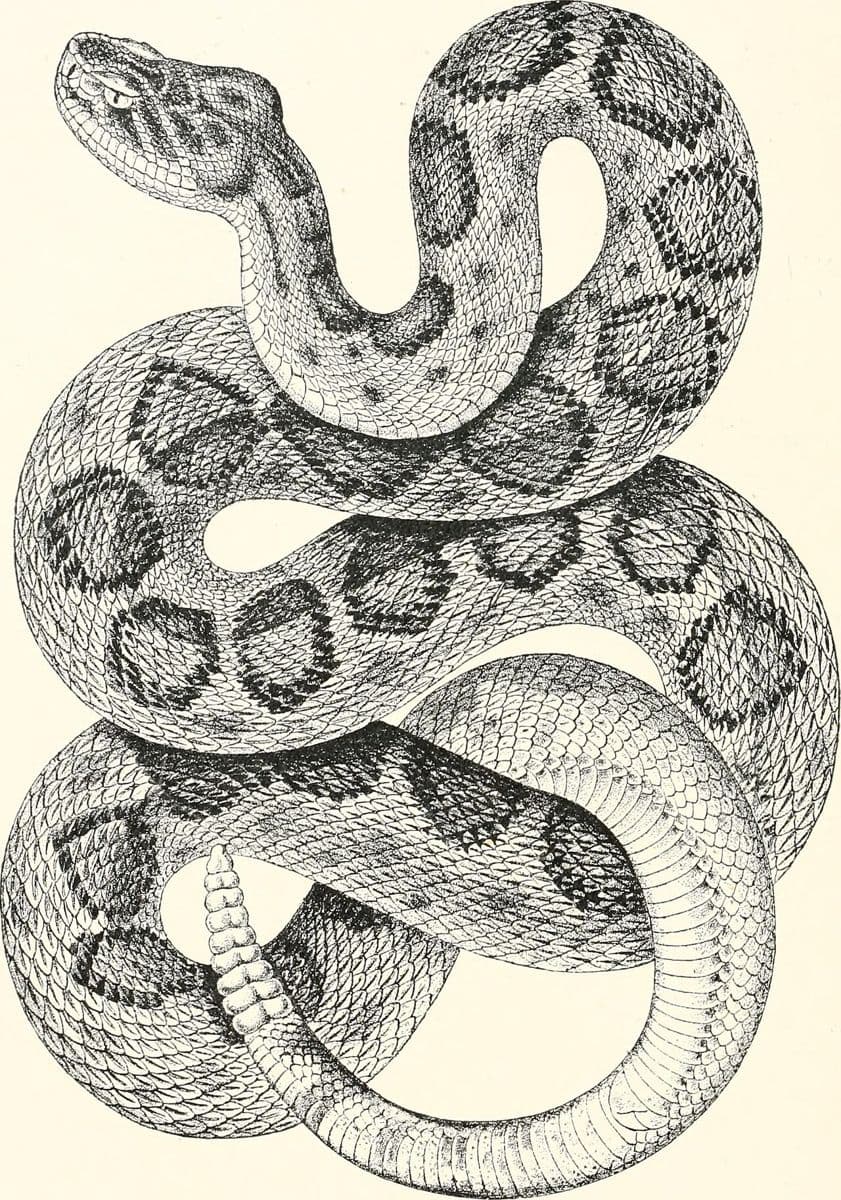
A coiled rattlesnake with its rattle raised, engraved for Albert Calmette's treatise on venoms and antivenom serotherapy (1908)
Internet Archive Book Images, public domain
Every year, roughly five million people are bitten by a snake, and 81,000 to 138,000 die from it, according to the WHO. It is not the jungle adventurer who dies: it is agricultural workers, children, and women in poor rural communities across Africa, Asia, and Latin America. Many die without anyone counting them, and the global death toll from snakes remains surprisingly uncertain.
Antivenom has existed for more than a century. Yet the price of some products has soared over the past twenty years, to the point that most of those who need it can no longer afford it: the cure is old, it is the patient who cannot pay. Only in June 2017 did the WHO formally list snakebite envenoming among the highest-priority neglected tropical diseases.
Every year, from 1.8 to 2.7 million envenomings
The Mosquito :First Place, and by Far
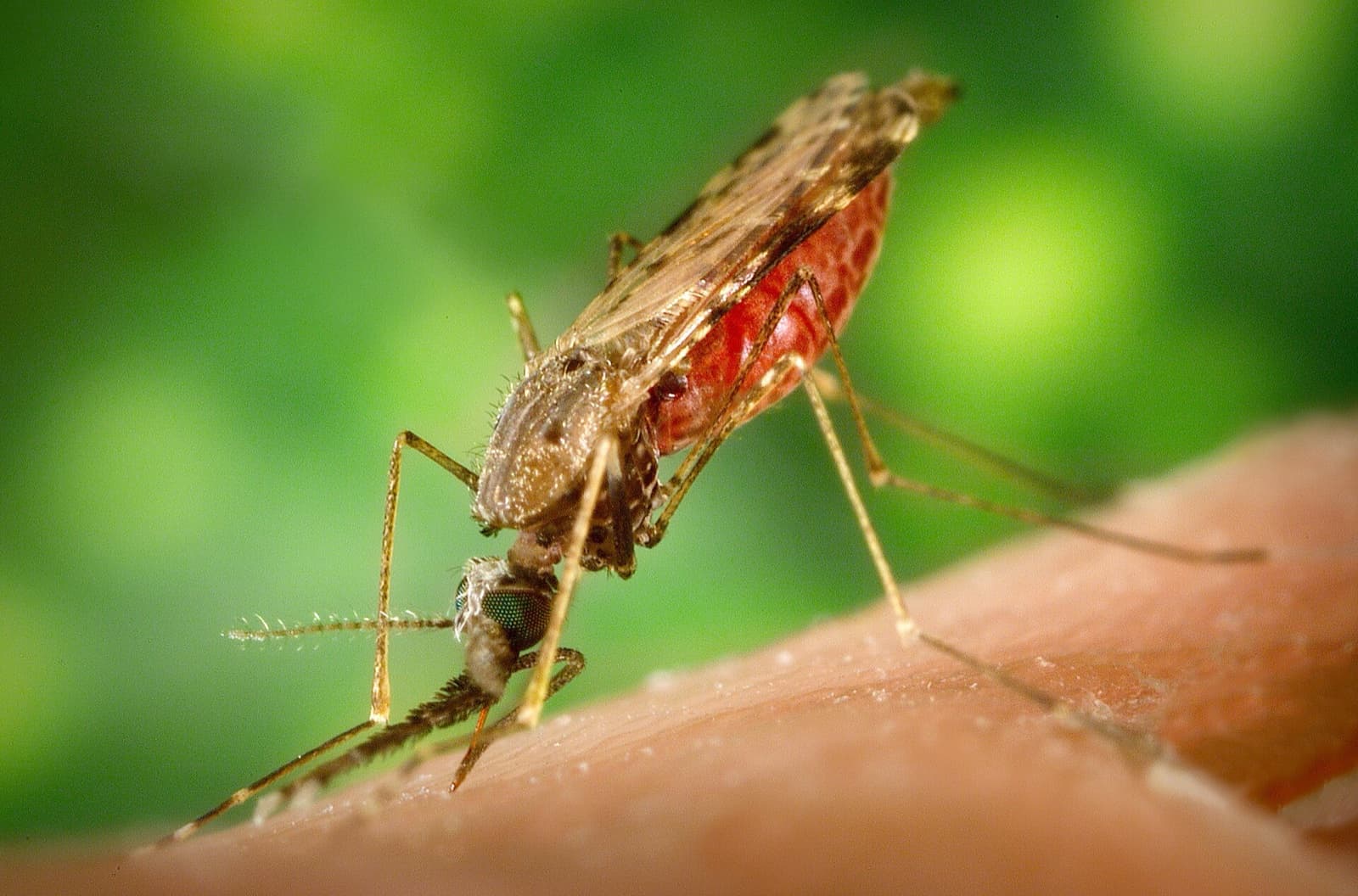
Female Anopheles albimanus, a malaria vector, taking a blood meal (2005)
CDC / James Gathany, public domain
On the second step of the podium stands an animal nobody expected to see there: us. Roughly 600,000 of us were killed by other humans in 2023. We are also the only species on the list to have written the ranking.
Above us stands a female. It is the female mosquito that bites, because she needs blood to produce her eggs; the Anopheles mosquito, which transmits malaria, usually bites late in the evening or at night. She bears us no malice. She is starting a family.
Malaria killed 610,000 people in 2024 according to the WHO—more than one person a minute. About 95% of those deaths occur in Africa, and there, three out of four victims are children under five. Her cousin Aedes aegypti bites during the day, in towns and cities, and transmits dengue: in 2024, a record year, more than 12,000 deaths were reported.
2023 estimate, all mosquito-borne diseases combined: malaria accounts for more than eight in ten, dengue and other viruses for the rest. The WHO's 610,000 figure counts only malaria, and for 2024
In 2019, historian Timothy Winegard wrote that the mosquito had killed roughly 52 billion humans—nearly half of all human beings who have ever lived. The claim had already been circulating, and as early as 2013 the BBC program More or Less judged it probably false: a researcher at the Liverpool School of Tropical Medicine estimated there, partly by informed guesswork, that 4 or 5% of humans died of malaria from 1900 going back through history—nowhere near half. The mosquito needs no exaggeration to stay in first place.
Prevention and treatment, for their part, have proven their worth: since 2000, 14 million malaria deaths have been averted.
What Our Fears Say About Us
Why do we tremble before the shark and not before the mosquito? Our World in Data answers with exposure: a large predator can be avoided; an insect that flies into a bedroom at night cannot.
The rest comes down to money. Bed nets, insecticide, rabies vaccine, antivenom, clean water: most of the remedies for this ranking already exist. Those who die from the mosquito, the dog, and the snake do not die for lack of a cure, but because the cure never reaches them.
WE FEAR WHAT HAS TEETHWE DIE FROM WHAT IS MISSING: A BED NET, A VACCINE, A VIAL OF ANTIVENOM