On Monday, April 28, 1986, shortly before seven o'clock, employees of Sweden's Forsmark nuclear power plant arrived for work, and the radiation monitor began to blare. It sounded for every one of them: their shoes were contaminated. Engineers searched for a leak inside the plant and found none. The radioactivity came from the air, and the air came from the east, from more than a thousand kilometers away.
Reactor 4 at Chernobyl, in Soviet Ukraine, had exploded two days earlier, and the world knew nothing. From the control room to the Kremlin, information stopped at every floor; radioactivity, however, crossed every border. Chernobyl was not merely the worst disaster in civil nuclear history. It was the moment a state discovered it could silence an accident, but not the wind, and according to its last leader, it may not have survived it.
The first to die were operators and firefighters in their twenties, sent to what had been described to them as a roof fire. Next came soldiers and reservists, who went up where the robots were breaking down, and children from Belarus, Ukraine, and Russia who drank the milk of a contaminated spring. The official death toll stopped at thirty-one dead. For future deaths, estimates range from a few thousand to nearly a million depending on who counts, and those deaths will never have names.
A Flaw Its Designers Knew
It was meant to be a technical test. Management wanted to verify whether, in the event of a power outage, the rundown of the turbine would still produce enough electricity to run the emergency pumps until the diesel generators started up. The same test had already been attempted without success the year before, and the deputy chief engineer, Anatoly Dyatlov, wanted to get it done.
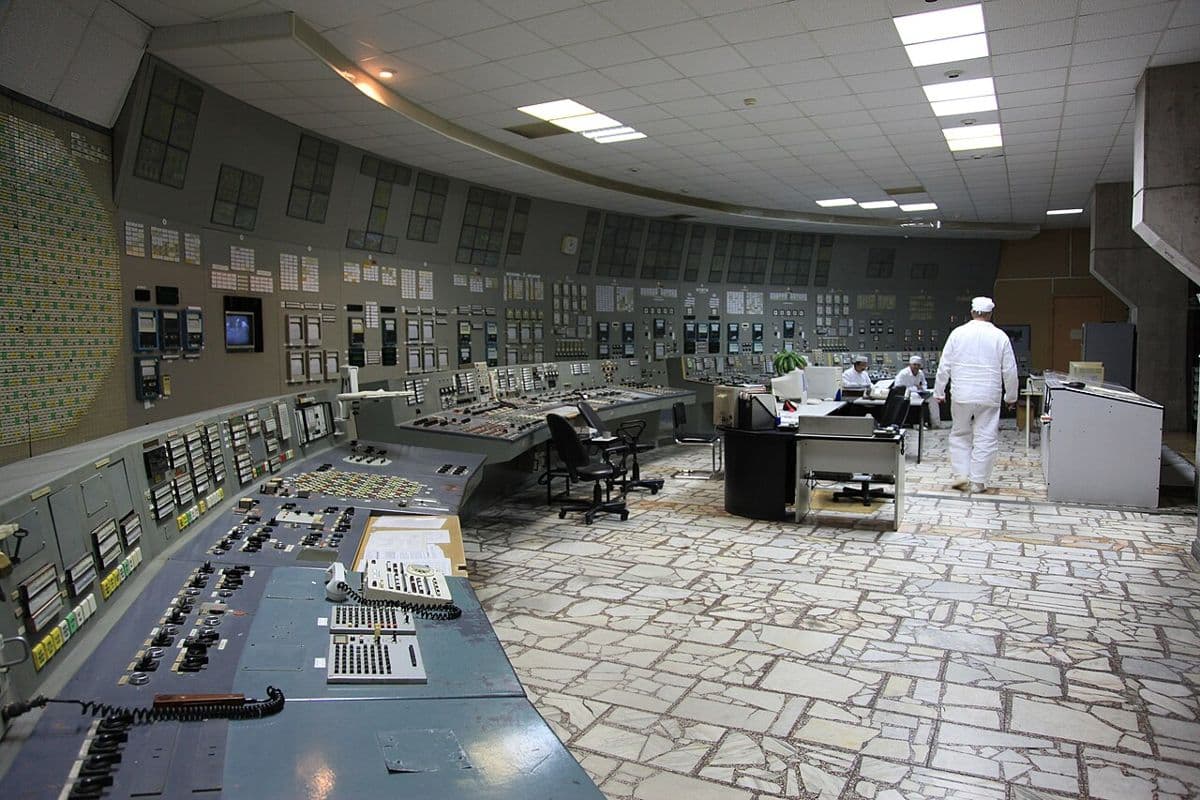
The control room of Chernobyl Reactor No. 3, of the same RBMK design as that of Reactor 4 : control consoles, indicator lights, and curved instrument wall, photographed in 2010
IAEA Imagebank, CC BY-SA 2.0
The reactor, however, was no longer in any state to undergo it. Held at half-power for hours at the request of the Kiev power grid, its core had built up xenon-135, a fission product that chokes the chain reaction. Shortly after midnight, power collapsed almost to zero. Instead of aborting the test, Dyatlov had it raised, and the operators withdrew nearly all the control rods, well below the minimum set by regulations.
The RBMK carried a birth defect: when cooling water boils, steam, instead of slowing the reaction, accelerates it. On April 26 at 1:23:40 a.m., shift foreman Aleksandr Akimov and twenty-five-year-old engineer Leonid Toptunov triggered the AZ-5 emergency shutdown. Accounts still differ on which of the two pressed the button.
It was the emergency shutdown that caused the reactor to explode. The control rods were tipped with graphite displacers: as they descended, they first drove water from the bottom of the core and introduced this graphite, which spurred the reaction. The effect had been noticed as early as 1983 at the Ignalina plant in Lithuania, and restrictions on rod withdrawal were supposed to follow. According to the IAEA, "such restrictions were never imposed and apparently the matter was forgotten."
Within a few seconds, power soared. The water vaporized instantly, fuel channels ruptured, and a steam explosion lifted "Elena," the thousand-ton slab capping the reactor. A second explosion tore open the roof, hurling burning graphite, uranium, and fission products into the night.
About ten times normal operating power, reached in a matter of seconds, according to estimates
A comparison of released material, commonly attributed to the IAEA, not explosive yield: the bomb kills at once by blast and fire; the reactor contaminates, and the exclusion zone around it was expanded to 4,300 km²
"A Roof Fire"
Firefighters were called for a fire on the roof of the turbine hall. First came the plant's own firefighters, led by twenty-three-year-old Lieutenant Vladimir Pravik, followed by those from the city of Pripyat, under Lieutenant Viktor Kibenok. They carried no dosimeters, and their gear was made for fire, not for what they were about to encounter.
On the roof, bitumen melted under their boots, and blocks of graphite blown from the core littered the ground. Near these fragments, the dose rate exceeded twenty thousand roentgens per hour, according to estimates: in a few minutes, a man received a fatal dose. The first sign was a metallic taste in the mouth. Then came vomiting, followed by skin that reddened and burned.
At this rate, a minute and a half is enough to receive about 500 roentgens, the upper bound of the dose that kills one out of two exposed persons within a month
Flown to Hospital No. 6 in Moscow, firefighters and operators passed through what doctors call the latency phase: for a day or two, they felt better, smiled, and asked after their families. Their bone marrow, however, had stopped producing blood, and their intestines were disintegrating from within.
Lyudmila Ignatenko described to Svetlana Alexievich, in Voices from Chernobyl, the death of her husband Vasily, a sergeant in the Pripyat fire department. Pregnant, she spent her days at his bedside. She described up to thirty bloody stools a day, skin splitting at the touch of the sheets, and pieces of internal organs coughed up. He died on May 13, 1986. Like the firefighters and technicians who died in the following weeks, he was buried at Mitino Cemetery in Moscow, in a zinc-lined coffin. Their daughter survived only briefly after birth.
The Figure That Reassured Moscow
In the plant's bunker, dosimeters all showed the same reading: 3.6 roentgens per hour. This was not a measurement; it was their maximum scale. Instruments capable of reading higher were nowhere to be found or out of order, and management chose to believe the mildest figure. During the night, plant director Viktor Bryukhanov informed Moscow that the reactor was intact and the situation under control.
Three kilometers away, Pripyat woke up to a spring Saturday. This young town, built for the plant's workers and their families, was home to nearly fifty thousand people. Weddings took place that day, and children played outside. Yet the town received its stable iodine tablets on April 26 and 27, and they protected thyroids. Villages in the thirty-kilometer zone would not receive them until early May, and those beyond from mid-May to August: too late.
Only after the state commission arrived on the scene with academician Valery Legasov and flew over the crater by helicopter was the evacuation decided. On Sunday, April 27, at 14:00 (2 p.m.), loudspeakers announced a temporary evacuation: bring identity papers, warm clothes, and a little food. More than a thousand buses evacuated the city, to which no one would ever return to live. Animals left behind were shot by hunting squads.
About a hundred kilometers to the south, Kiev was not evacuated. On May 1, the May Day parade went ahead as every year, and thousands of people marched in columns through the streets. The Politburo chose the parade over the instruction to shelter indoors.
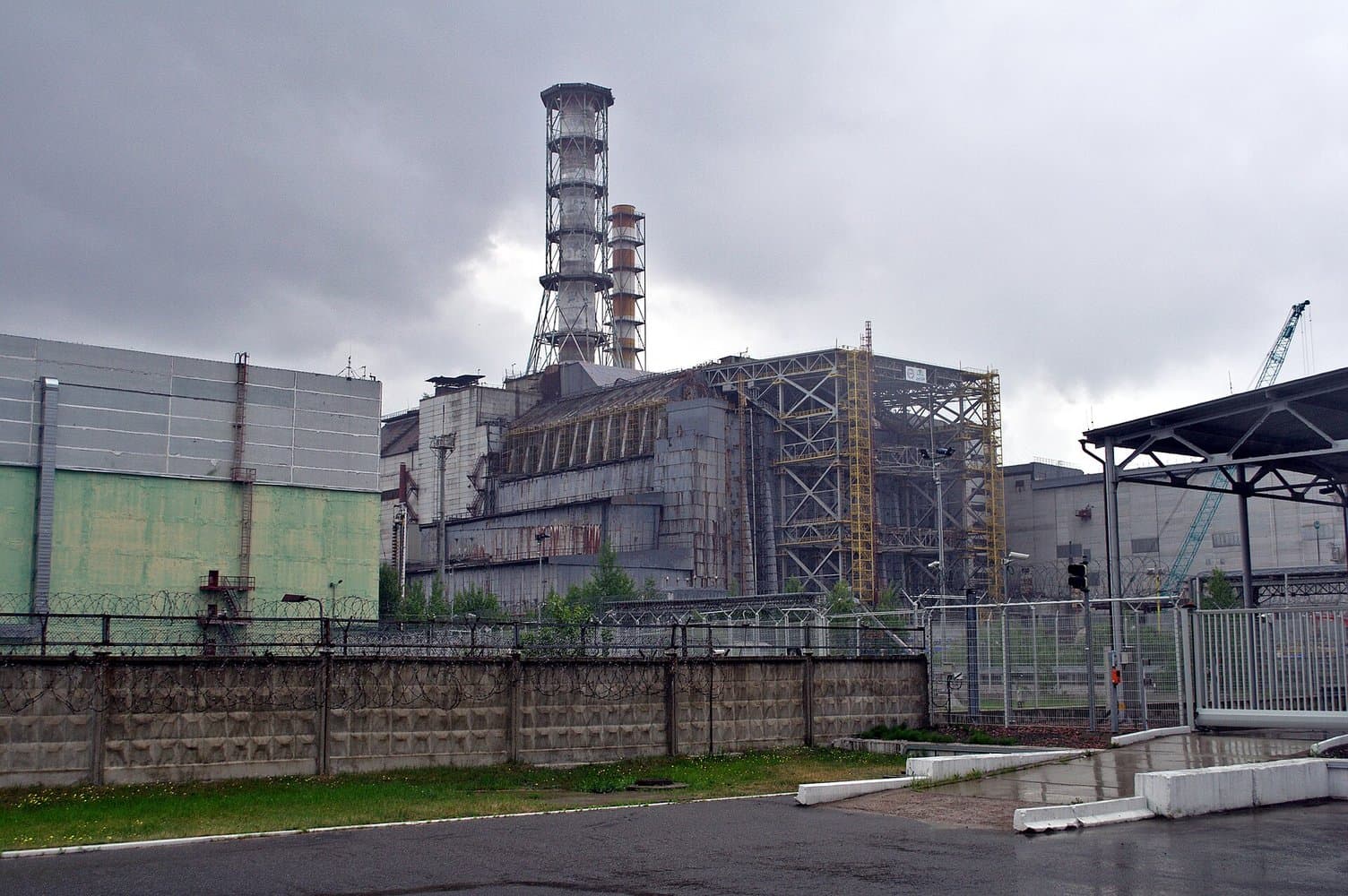
Chernobyl Reactor No. 4 under its first sarcophagus, in May 2013, before the installation of the new arch (2016)
Paweł Szubert / Wikimedia Commons (CC BY-SA 3.0)
Men in Place of Machines
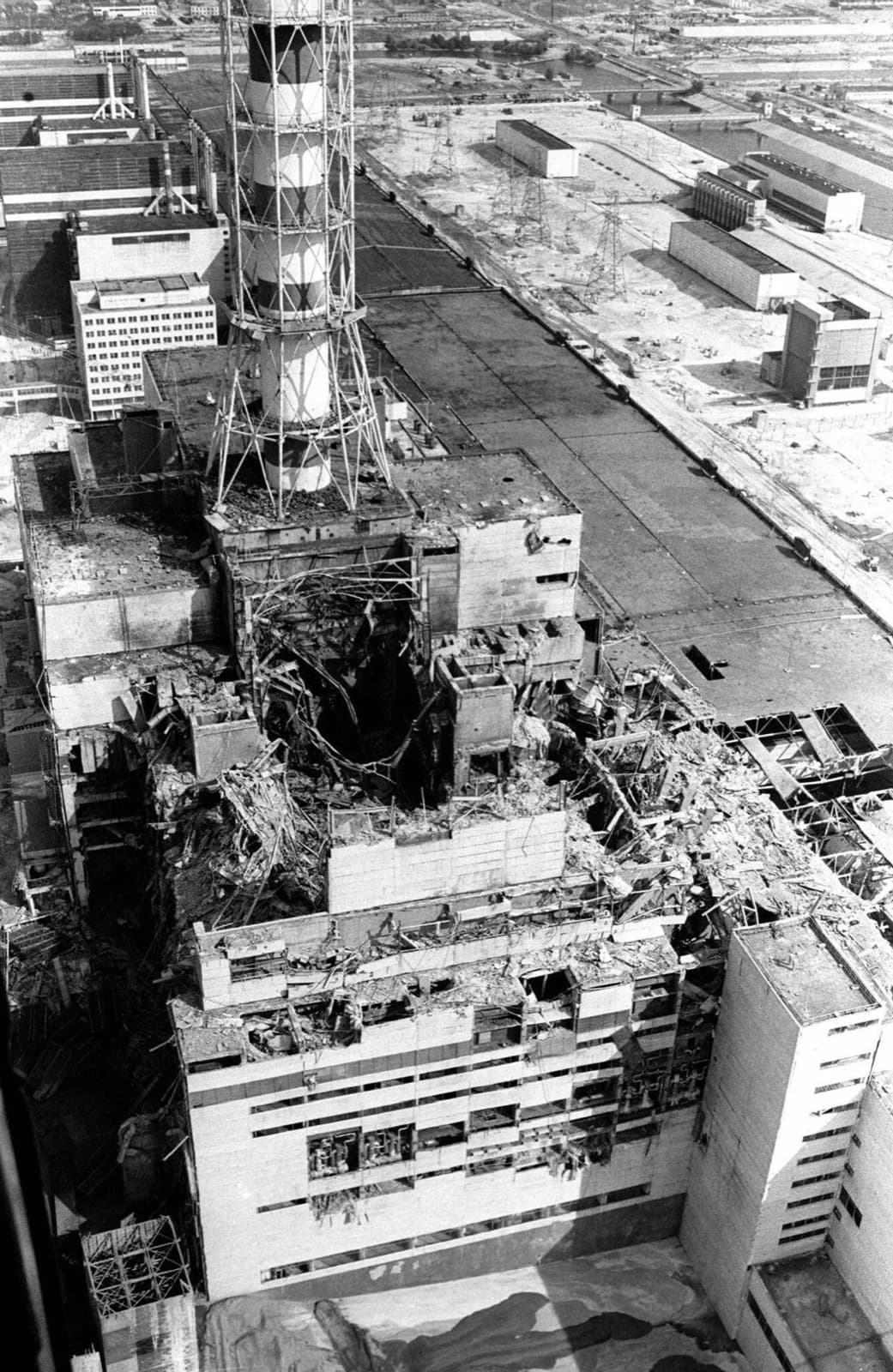
The destroyed Chernobyl reactor photographed from a helicopter in 1986, before the construction of the sarcophagus
USFCRFC / IAEA Imagebank, CC BY-SA 2.0
In early May, the commission feared something worse still. The molten fuel, corium, a lava at more than 2,000 °C, was burning through the reactor floor; beneath it lay pools full of water. If it reached them, a new steam explosion could disperse the fuel a second time and damage the other reactors. Plant workers—engineers Alexei Ananenko and Valeri Bezpalov, and shift supervisor Boris Baranov—descended into the flooded basements to open the drain valves. Contrary to legend, all three survived.
At the same time, miners dug a tunnel beneath the reactor to install a cooling system. It was never used: the corium solidified before breaching the pad, and the tunnel was filled with concrete.
Then came the roof. To build the sarcophagus, workers had to clear the graphite blocks that the explosion had hurled onto the terraces of Reactor 3. The USSR brought in a police robot from West Germany, the Joker; near the edge, the radiation fried its electronics. Command then sent in men, who would be nicknamed the "biorobots."
During the summer and autumn of 1986, more than three thousand soldiers and reservists took turns on that roof, clad in hand-cut sheets of lead. Their instructions came down to a few movements: climb the ladder, run to a block, shovel it with one heave into the crater, and climb back down. A minute and a half at most, often less, and that was already the maximum allowed dose for their entire mission. Ninety seconds with a shovel, and the state deemed they had given all a human body could give. They were among the roughly two hundred thousand liquidators of 1986 and 1987, the most heavily irradiated of all.
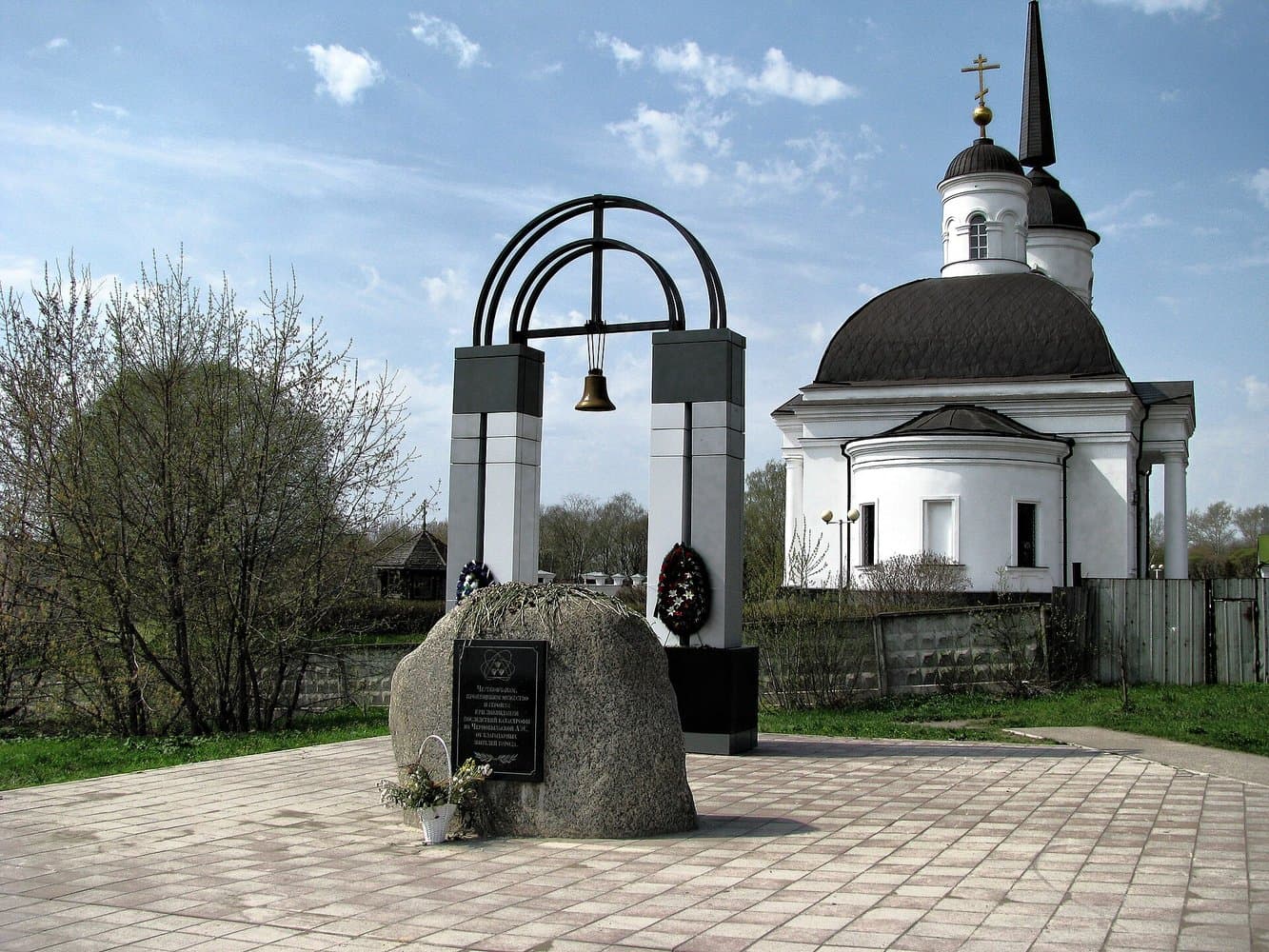
Monument to the Chernobyl liquidators in Cherepovets (Russia)
Arthur Kaljas / Wikimedia Commons (CC BY-SA 4.0)
A Boat, a Meteorologist, Two Days of Silence
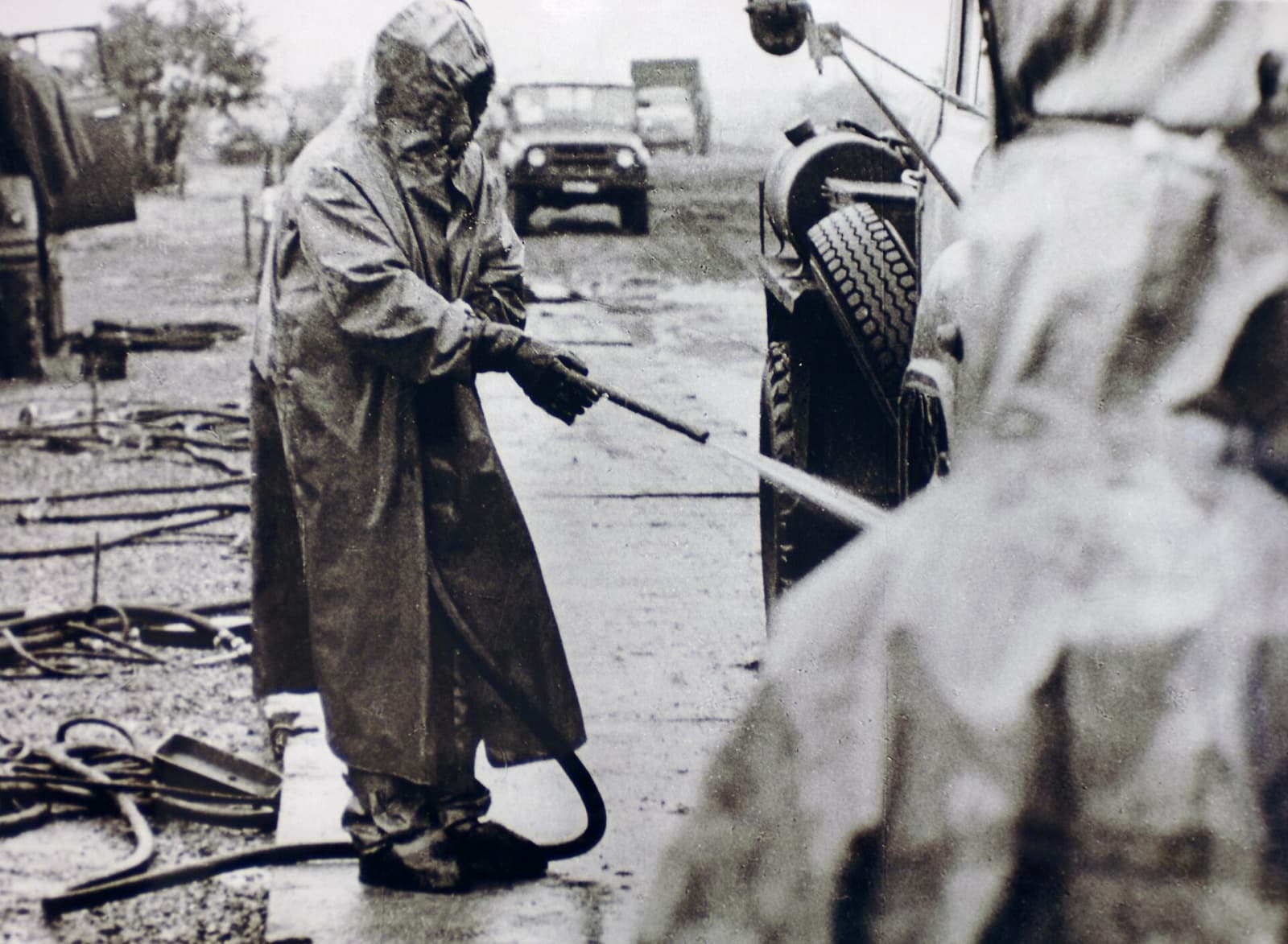
Decontamination of a vehicle near Chernobyl, 1986
USFCRFC / IAEA Imagebank, CC BY-SA 2.0
The proof came from a boat. Left ashore two or three kilometers from Forsmark, it had collected rainwater, and this rainwater was radioactive. In Norrköping, at the Swedish Meteorological and Hydrological Institute, Persson traced the air trajectory back to its origin: somewhere in the southwestern Soviet Union.
The Swedish embassy in Moscow questioned Soviet authorities, who denied it. *On Monday evening, the television news program Vremya read an announcement of roughly twenty seconds*: an accident had occurred at the Chernobyl nuclear plant, a reactor was damaged, and a government commission had been appointed.
The cloud, however, waited for no one. After Poland, the Baltic states, and Scandinavia, it turned southwest toward West Germany, Austria, Switzerland, and northern Italy. Governments took precautions: in Bavaria, playgrounds were closed and the sand in sandboxes replaced; in Italy, leafy vegetables and fresh milk were banned for young children.
The Border Drawn on Television
France, meanwhile, thought itself sheltered. On the evening of April 30, the weather presenter for Antenne 2, Brigitte Simonetta, showed it on her map. "In France, the Azores anticyclone has developed," she explained, "powerful enough to provide a genuine protective barrier": it "effectively blocks all disturbances coming from the east." On the map, a "Stop" sign halted the cloud. She later said she had "the unfortunate idea of putting up a stop sign." The cloud reached eastern France that very evening, between 16:00 and 20:00 depending on the department.
The country was then operating one of the world's largest civilian nuclear fleets, and the Central Service for Protection against Ionizing Radiation (SCPRI), headed by Professor Pierre Pellerin, acknowledged only a "slight increase in atmospheric radioactivity, not significant for public health." Rain between May 1 and May 5, however, deposited cesium-137 across the East in patches commonly exceeding 10,000 becquerels per square meter, and locally 20,000, according to the IRSN; the West, where the air was less laden, often received less than 2,000. For comparison: around Chernobyl, mandatory resettlement of residents starts at 40 curies per square kilometer, or 1.48 million becquerels per square meter, between seventy-five and one hundred fifty times the most contaminated patches in the East; the exclusion zone itself was first drawn on a thirty-kilometer radius.
Distrust took shape that very May. A group of citizens founded the CRIIRAD, equipped with its own laboratory, "in response to the erroneous information disseminated at the time of the disaster." In 2001, together with the French Association of Thyroid Patients, it filed a lawsuit. Pellerin, indicted for "deception and aggravated deception," was granted a dismissal of charges, which the Court of Cassation upheld on November 20, 2012: in the current state of knowledge, it was impossible to establish a definitive causal link between observed illnesses and the fallout. The courts found no legal fault, but the Antenne 2 map remained the symbol of official minimization.
Counting the Deaths of a Cloud
The Soviet toll stands in a single line: thirty-one dead. It counts the two technicians killed on the night of the explosion, Valery Khodemchuk, whose body was never recovered from the ruins, and Vladimir Shashenok; twenty-eight firefighters and operators who died of acute radiation syndrome at Moscow Hospital No. 6; and one cardiac death on site. All later deaths escape this count. In 2005, the WHO directly attributed to radiation fewer than fifty deaths, almost all highly exposed rescue workers, some dying within months, others as late as 2004.
A television series added its own dead to this count. In 2019, the HBO miniseries Chernobyl showed residents of Pripyat who had come to watch the fire from a bridge, closer to the plant, and a closing note states that none of them survived: this is the "bridge of death." Residents did go there, but Jim Smith, professor of environmental science at the University of Portsmouth, found no evidence that they all died. Experts confirmed 134 cases of acute radiation syndrome, among the firefighters and plant staff, and none among the residents of Pripyat, who received on average the equivalent of three whole-body CT scans.
Children were the other visible victims. Iodine-131 passed from grass into milk, and from milk into the thyroids of those growing up in Belarus, Ukraine, and western Russia. The United Nations Scientific Committee counted about 20,000 thyroid cancers diagnosed between 1991 and 2015 among individuals exposed at age eighteen or younger, with one in four attributable to radiation. Patients almost always recover, at the cost of lifelong hormone therapy; at least nine children died from it, according to the WHO.
200,000 emergency and recovery workers from 1986 and 1987, 116,000 evacuees, and 270,000 residents of the most contaminated zones
For the rest, one must calculate. Chernobyl's future deaths appear in no registry: they are deduced from received doses. The Chernobyl Forum, bringing together the WHO, the IAEA, and the World Bank, expects about four thousand deaths among the most exposed, including 3,940 from cancer and leukemia; in 2006, the WHO estimated there could be up to nine thousand. These four thousand deaths are lost in the background: a quarter of the 600,000 people concerned will die of cancer unrelated to Chernobyl anyway, and the WHO considers that the roughly 3% increase "will be difficult to observe." Independent studies, extending calculations far beyond the worst-hit zones, arrive at several tens of thousands. The highest, published in 2009, suggests nearly one million deaths; it is widely disputed.
Chernobyl: The toll according to who counts
Deaths attributed to the disaster| Estimate | Who calculated it, and for which population |
|---|---|
| 31 deaths | Soviet toll: deaths on the night of the explosion and at Moscow Hospital No. 6 in 1986 |
| About 4,000 deaths over time, including 3,940 from cancer and leukemia | Chernobyl Forum (WHO, IAEA, World Bank, 2005), among the roughly 600,000 most exposed people |
| Up to 9,000 excess cancer deaths | WHO (2006), upper bound |
| 30,000 to 60,000 excess cancer deaths | TORCH, Ian Fairlie and David Sumner (2006), worldwide, according to the linear no-threshold model of the International Commission on Radiological Protection |
| About 93,000 projected fatal cancers, and 200,000 excess deaths from 1990 to 2004 | Greenpeace (2006); for the 200,000 deaths, in Belarus, Russia, and Ukraine, Russian estimates that Greenpeace cites |
| 985,000 premature deaths from 1986 to 2004 | Yablokov, Nesterenko, and Nesterenko (2009), Annals of the New York Academy of Sciences; the Academy notes it neither commissioned nor peer-reviewed it |
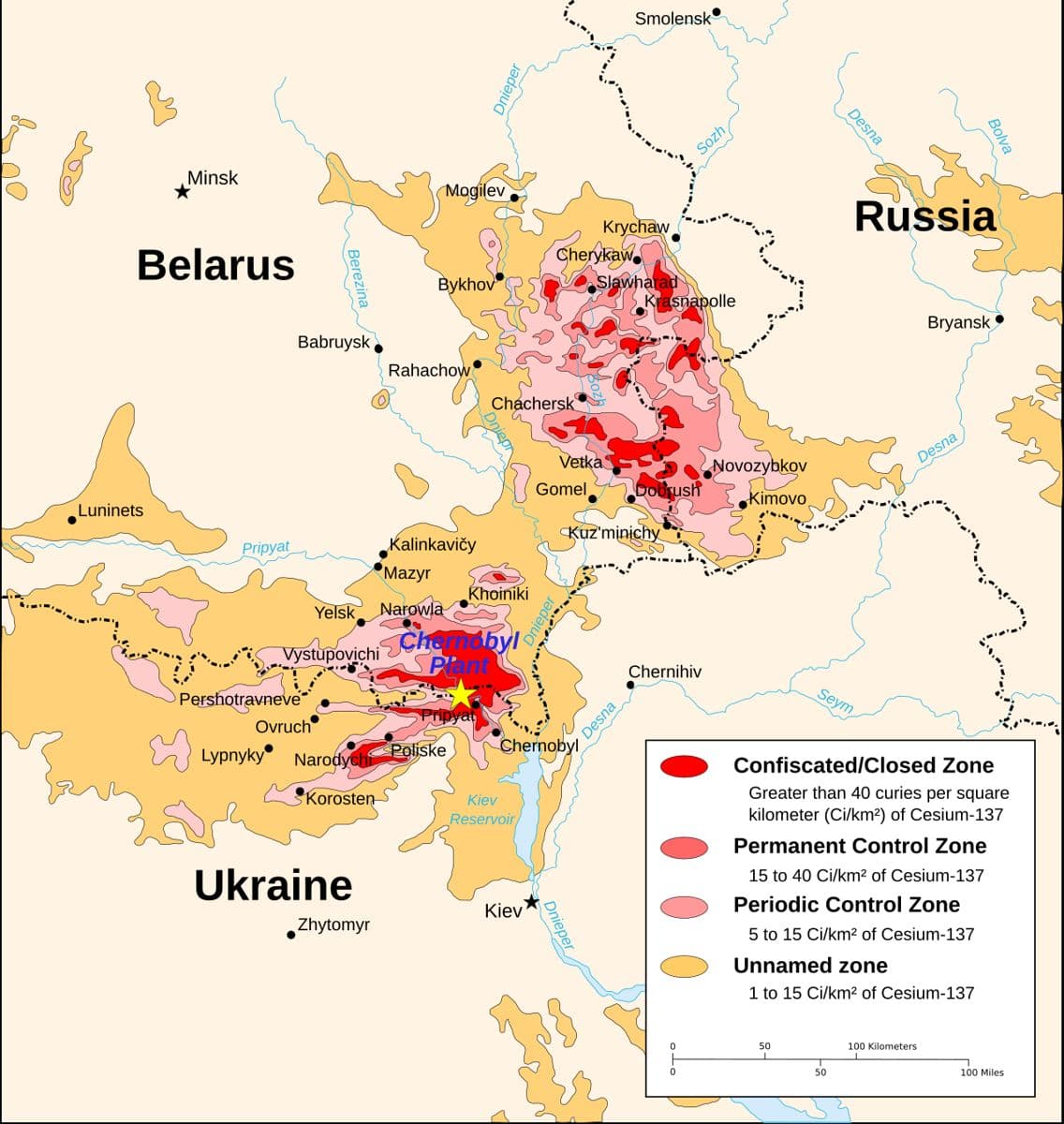
Cesium-137 contamination around Chernobyl in 1996 : in bright red, the exclusion zone (more than 40 curies per km²) around the plant and in southeastern Belarus, followed by zones of permanent and periodic control, extending into Russia
after CIA, CC BY-SA 2.5
What the Reactor Swept Away
The regime put its plant operators on trial. On July 6, 1987, at the Chernobyl house of culture, the trial opened for six men accused of violating safety regulations. Anatoly Dyatlov and Viktor Bryukhanov received the harshest sentence, ten years. Dyatlov was released in 1990, sick, under an amnesty, and died in Kiev in 1995; Bryukhanov was released in September 1991, halfway through his term.
Valery Legasov had presented the accident before the IAEA in Vienna in August 1986, without disclosing all the RBMK design flaws censored by the Central Committee. "I did not lie in Vienna," he reportedly confided, "but I did not tell the full truth." He hanged himself on April 27, 1988, the day after the second anniversary of the explosion.
It was the HBO miniseries Chernobyl that made Legasov a television hero, and it is about him that it invents the most. It has him testify at the operators' trial and accuse, before the judges, a state that refused to admit the flaws in its reactors. Legasov did not attend that trial, and the historian David P. Hadley calls the scene "a pure invention." The series also has him die on the very night of the second anniversary, one day too early.
Secrecy did not hold, nor did the regime that had organized it. Faced with contamination that no Party stamp could stop, Mikhail Gorbachev said he understood how important it was to continue glasnost, or openness. Twenty years later, he wrote:
The deception left another mark, harder to quantify. In 2005, the WHO judged that the impact on mental health was the largest public health problem unleashed by the accident: persistent myths and fears about radiation had fostered a "paralyzing fatalism" among inhabitants of affected areas.
Forty years later, war returned above the reactor. On February 14, 2025, a drone pierced the arch covering it since 2016. In December 2025, the IAEA found that the shelter had lost its primary safety functions, including confinement; further temporary repairs are scheduled for 2026.
Can the zone still be visited? Not since the invasion. Declared a tourist attraction in 2011, it had received more than one hundred thousand visitors in 2019, a record that the Ukrainian agency in charge of the zone attributed in part to the HBO miniseries. Visits have been suspended since February 2022, and in April 2023, Ukraine's environment minister, Ruslan Strilets, did not see them resuming before the end of martial law.
The danger that remains lies mainly in cesium-137, whose radioactivity falls by half in thirty years. Forty years after the explosion, about four tenths of it remains; one tenth will still be left in 2086. The forest, which today covers nearly 90% of the zone, holds it in its soils along with strontium and plutonium, and the ban on living, farming, logging, or hunting there also serves to keep them from getting out.
The arch had been slid over the reactor in November 2016 by Novarka, the French consortium of Vinci and Bouygues, to last at least one hundred years; the drone opened a hole about six meters in diameter in it. In October 2026, the G7 pledged €260 million for urgent repairs. The EBRD estimates that they will cost at least €500 million, and wants them completed in 2030, before corrosion eats into the arch's steel.
Chernobyl was not an unpredictable accident: a regime can doctor its records and silence its engineers, but none can stop a cloud at its border