On the farms of Gloucestershire at the end of the eighteenth century, people repeated something doctors did not believe: girls who milked cows never caught smallpox. In 1796, a country doctor took the rumor seriously, tested it on an eight-year-old boy, and gave humanity its first weapon against an infectious disease. It would take one hundred and eighty-four years to use it to the very end.
During that delay, in the course of the twentieth century alone, the smallpox virus (Variola virus) killed more than 300 million human beings: neither the two world wars, nor the extermination camps, nor the gulags claimed a comparable toll. This figure comes from Donald Henderson, who directed its eradication; elsewhere, the same man puts forward at least half a billion deaths for the final hundred years of the disease: the order of magnitude is certain, the count is not. It did not strike only the humble: it reportedly disfigured Pharaoh Ramesses V, whose mummy bears pustular lesions suggestive of smallpox, carried off Emperor Joseph I and King Louis XV, and left behind across all social classes pockmarked survivors, sometimes blind.
Then, on May 8, 1980, in Geneva, the 33rd World Health Assembly pronounced a sentence humanity had never dared dream: "The world and all its peoples have won freedom from smallpox." For the first time, mankind had wiped a pathogen from the face of the Earth.
This victory owed almost nothing to a laboratory breakthrough: the weapon dated back to 1796. It was won through knocking on doors, offering rewards to whoever reported a patient, and a small two-pronged steel fork.
The Killer Had Only One Home
The smallpox virus was a DNA Poxviridae, of formidable genetic stability where influenza mutates incessantly. And it possessed one absolute characteristic, the very one that would seal its doom: it had no animal reservoir. It could live in only one receptacle on this planet, the human being, whom it reached through the micro-droplets of a cough or through bed linen soiled with dried pus, where it persisted for weeks.
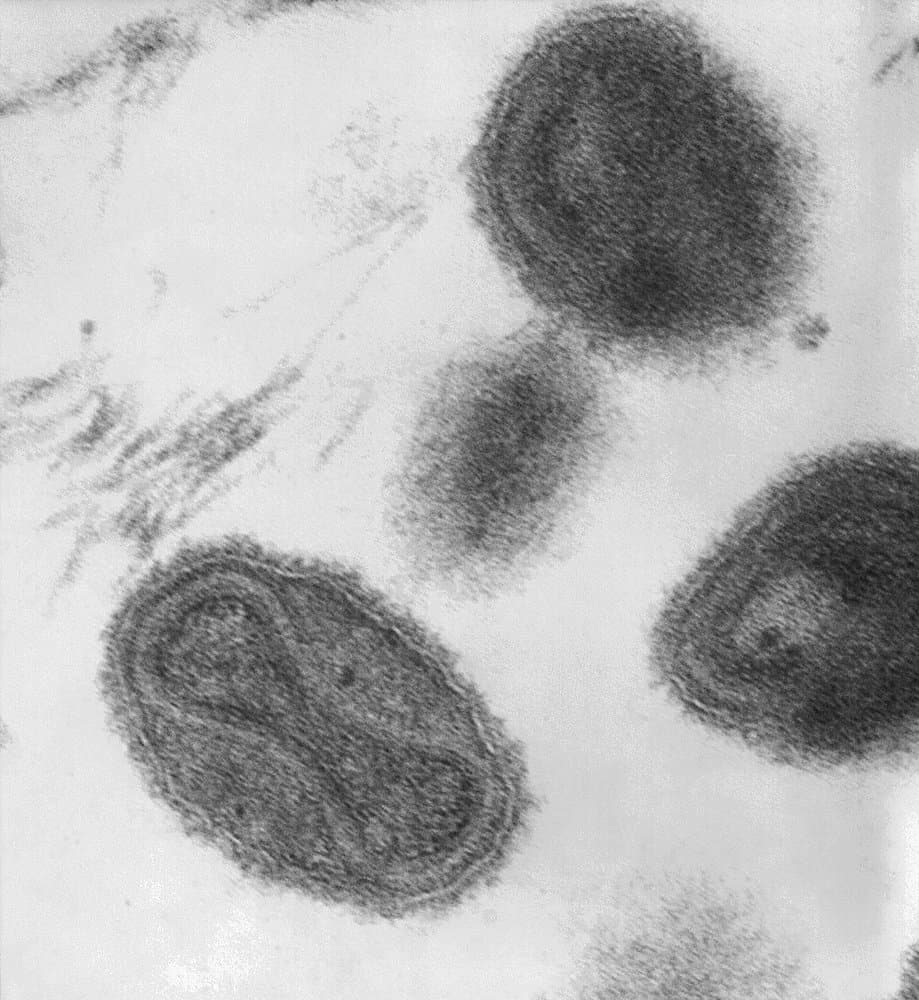
Smallpox virions under the electron microscope
CDC / Dr. Fred Murphy (public domain)
Then it fell silent. For one to two weeks, it colonized lymph nodes and the respiratory tract without a single symptom. Fever struck suddenly, at 40 °C, with racking headaches and intolerable lower back pain. Around the fourth day, red macules appeared on the tongue, throat, and face, then on the hands and soles of the feet: this "centrifugal" distribution, sparing the trunk, was the unmistakable signature of smallpox, and it was what would make the virus trackable.
The papules turned into hard vesicles, umbilicated like small pearl buttons, then filled with foul-smelling pus. In the confluent form of Variola major, skin on the face and limbs peeled off in weeping sheets and eyes ulcerated—the disease was long one of the leading causes of blindness. Around the tenth day came death, from toxic shock comparable to that of severe burn victims, or from "black smallpox" (purpura variolosa), a generalized hemorrhage that struck down the patient in a pool of incoagulable blood.
An average: fewer than 10% of patients died when the rash stayed sparse, 62% when it became confluent, nearly all with black smallpox; alastrim killed only 1%
A Continent Without Antibodies
Isolated from Eurasia for more than fifteen thousand years, the populations of the Americas lived in a virgin epidemiological bubble. They had never been exposed to the major pathogens of Eurasian livestock farming: smallpox, measles, influenza, plague. In 1520, chroniclers name as the carrier of smallpox a man of African origin with the Spanish expedition to Mexico, Francisco de Eguía, probably enslaved. The virus reached Tenochtitlan, where an immense portion of the population perished in a few weeks; Emperor Cuitláhuac, successor to Moctezuma, was carried off in his turn in 1520, probably by smallpox, and the Aztec military command was decapitated.
Smallpox, measles, typhus, but also wars, forced labor, and famines: nearly fifty million deaths in a little over a century
It then traveled south faster than the conquistadors' horses. An epidemic, very probably smallpox, reached the Inca Empire around 1525-1528, several years before the arrival of Francisco Pizarro: it very probably carried off Emperor Huayna Capac and his legitimate heir Ninan Cuyochi, opening a war of succession from which the Spaniards would profit: at Cajamarca in 1532, one hundred and sixty-eight of them captured the ruler of an empire of more than ten million inhabitants. The virus did not act alone—historical demographers estimate that smallpox, along with the other imported diseases and the violence of conquest, wiped out between 80% and 90% of the Native American population in a little over a century. The greatest known demographic collapse.
A Milkmaids' Rumor, Two Incisions
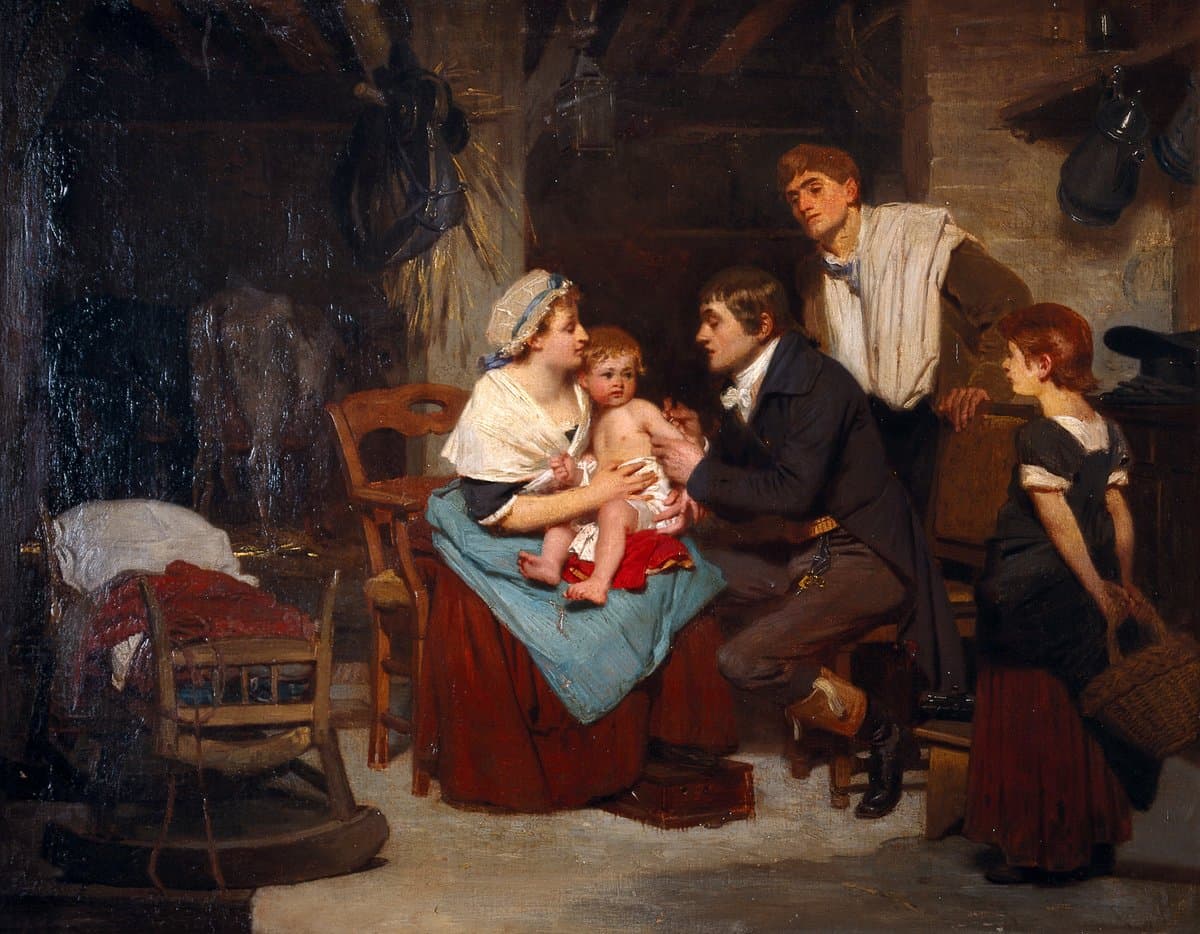
Edward Jenner vaccinating James Phipps on May 14, 1796, painting by Gaston Mélingue (1879)
public domain
Medicine already had a risky defense: variolation, practiced in China and the Ottoman Empire. Pus or dried scabs were taken from a patient with a mild form, to blow into the nose of a healthy child or inoculate with a lancet. The inoculated individual generally developed an attenuated smallpox and lifelong immunity. But the gamble remained terrifying: about 1 to 2% of variolated individuals died of it, and some sparked new outbreaks around them.
What Edward Jenner added was a disease of cattle. Milkmaids caught cowpox, which produced only small, painless pustules on the hands, and then appeared protected: animal infection, he hypothesized, immunized against human smallpox.
He himself wrote, in his 1798 Inquiry, that he chose "a healthy boy, about eight years old." This was James Phipps, the son of his gardener. On May 14, 1796, Jenner took matter from the hand of dairymaid Sarah Nelmes, infected by her master's cows, and made "two superficial incisions" on the arm of the child, who had only a headache and a day of indisposition.
On July 1, he deliberately inoculated him with real smallpox matter, taken from a pustule. His report took three words: "no disease followed". The word "vaccine," from the Latin vacca, cow, had just entered human history.
One Hundred and Eighty-Four Years Late
The weapon had been found; the killer carried on. Liquid vaccine degraded in the tropics, no international logistics carried it to the populations who needed it, and smallpox remained, for nearly two centuries, a disease of countries that went uncounted.
In France, the weapon became mandatory in 1902. The senator who would propose suspending it, in 1979, still cited the figures that had imposed it: during the war of 1870-1871, the French army reportedly counted 115,000 cases of smallpox and 24,000 deaths, while the German army, vaccinated, was spared; during the First World War, out of eight million theoretically vaccinated soldiers, 4 deaths.
The last French epidemic arrived by plane. On November 11, 1954, a paratrooper sergeant left Saigon on medical repatriation; on leave in Vannes, he passed smallpox to his son, whom the hospital treated for chickenpox: the father had been vaccinated again and again. The Institut Pasteur did not confirm smallpox until early January 1955, and Morbihan vaccinated 230,000 people in three days. The toll depends on who keeps it: 90 cases for the Senate in 1979, 78 to 83 cases and 16 deaths in Vannes, then 19 cases and 4 deaths in Brest according to the historians who went back over the theses of the time. Among the dead in Vannes was Dr. Guy Grosse, the departmental director of health, infected at the bedside of the sick; of the eighteen children who caught it, fifteen had never been vaccinated, despite the 1902 law.
Even the idea of finishing it off had to wait. In 1958, Soviet Deputy Minister of Health Viktor Zhdanov proposed to the World Health Assembly that smallpox be eradicated; the following Assembly adopted the goal by acclamation, and then almost nothing happened for seven years. The WHO already had its major campaign, against malaria, which absorbed 20% or more of its funds and was beginning to fail, and its Director-General, Marcolino Candau, considered eradication impossible.
In 1966, the intensified program's budget, 2.4 million dollars a year for ten years, passed the Assembly with 60 votes, when 58 were needed. The only human virus ever eradicated was eradicated on a budget passed by two votes.
More than 8,000 deaths a day on average, for a whole century, while the vaccine had existed since 1796
In 1967, it was still endemic in more than thirty countries in Africa, Asia, and South America, where it infected ten to fifteen million people each year and killed roughly one and a half million. Countries reported only 132,000 cases, roughly one in a hundred. That year, the World Health Organization entrusted Donald Henderson with the most ambitious program in the history of international health. Vaccinating 100% of the planet was physically impossible: it needed another idea.
Surround the Patient, Starve the Virus
The idea came from the field. In Nigeria in 1966-1967, faced with a vaccine shortage, American epidemiologist William Foege devised surveillance-containment, or ring vaccination: instead of chasing the entire population, each case was tracked down and isolated, and its contacts, neighbors, and visitors were vaccinated first. Deprived of non-immune bodies to jump to, the virus hit a biological wall and died out on its own within weeks—and because it had no animal reservoir, it had nowhere to retreat.
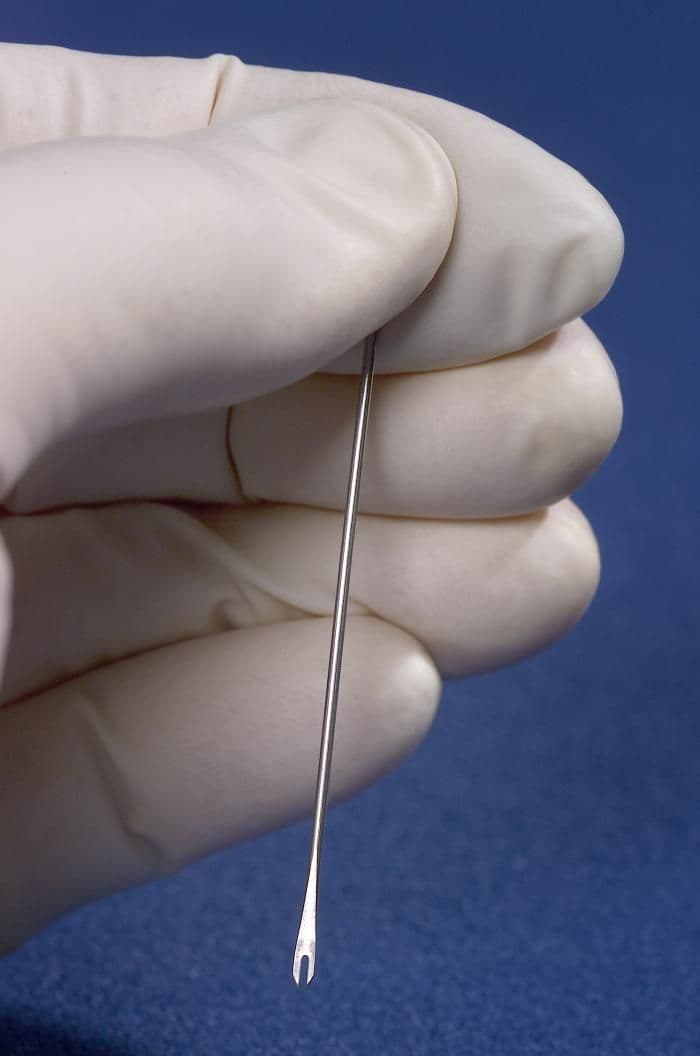
A bifurcated smallpox vaccination needle held between gloved fingers : the small fork at the tip holds the droplet of vaccine
James Gathany, CDC, public domain
The other piece was the bifurcated needle, a steel fork invented by Benjamin Rubin in 1965, holding by capillarity exactly one droplet of vaccine. By puncturing the skin fifteen times in a few seconds, without a syringe, any vaccinator could be trained in minutes and vaccinate on an assembly line.
The Twelve Million Doors of Bangladesh
In its final decade, the virus took refuge among people whom no one counted. In Bangladesh, it returned in 1972 with refugees from the war of independence, packed into the trains, buses, and boats of the journey home; it left with residents of Dhaka's slums, razed by government order; in 1974, it followed families driven out by the worst floods in fifty years. In four years, it made 225,000 people ill and killed 40,000 to 45,000 in that country alone. And those it let live paid as well: program epidemiologists noted the fate of pockmarked young women, whose chances of marrying collapsed.
The difficulty was not vaccination; it was knowing where the patient was. In 1972, only one case in ten was reported. It took buying information—a reward of 50 takas for anyone reporting an infected village, raised to 500—and going to look: five house-to-house search campaigns, twelve thousand workers each assigned a thousand houses, twelve million doors every time. Three years later, more than eight cases in ten were reported.
On October 16, 1975, on Bhola Island, a little girl named Rahima Banu developed a confluent rash on her face. The last case of Variola major in history was reported by an eight-year-old child, Bilkisunnessa, herself a survivor of the disease. Atlanta confirmed the verdict: the killer strain. The island was cordoned off, the people around her vaccinated, and guards posted day and night in front of the house. Rahima Banu survived.
Two years later, in the port of Merca, Somalia, a twenty-three-year-old hospital cook named Ali Maow Maalin came down with fever and a vesicular rash. Unvaccinated for fear of the needle, he had guided the vehicle carrying two children with smallpox. He had alastrim, the least deadly strain, and recovered in quarantine: after him, the virus would never again arise in a human community. He spent the end of his life vaccinating Somali families against polio, before succumbing to malaria in 2013.
Last natural case: Ali Maow Maalin, in Merca, Somalia, on October 26, 1977; then Janet Parker, infected in a laboratory in 1978
Driven from human communities, the virus still lived in laboratories. On August 11, 1978, in Birmingham, Janet Parker, a forty-year-old medical photographer at the medical school, developed pus-filled blisters without having left England. Her office was above the virology laboratory of Professor Henry Bedson, who was working with live smallpox strains; according to the official report, the virus passed through the ventilation ducts, a hypothesis disputed since. Janet Parker died on September 11, 1978, the last smallpox victim in the world. Professor Bedson took his own life five days before her.
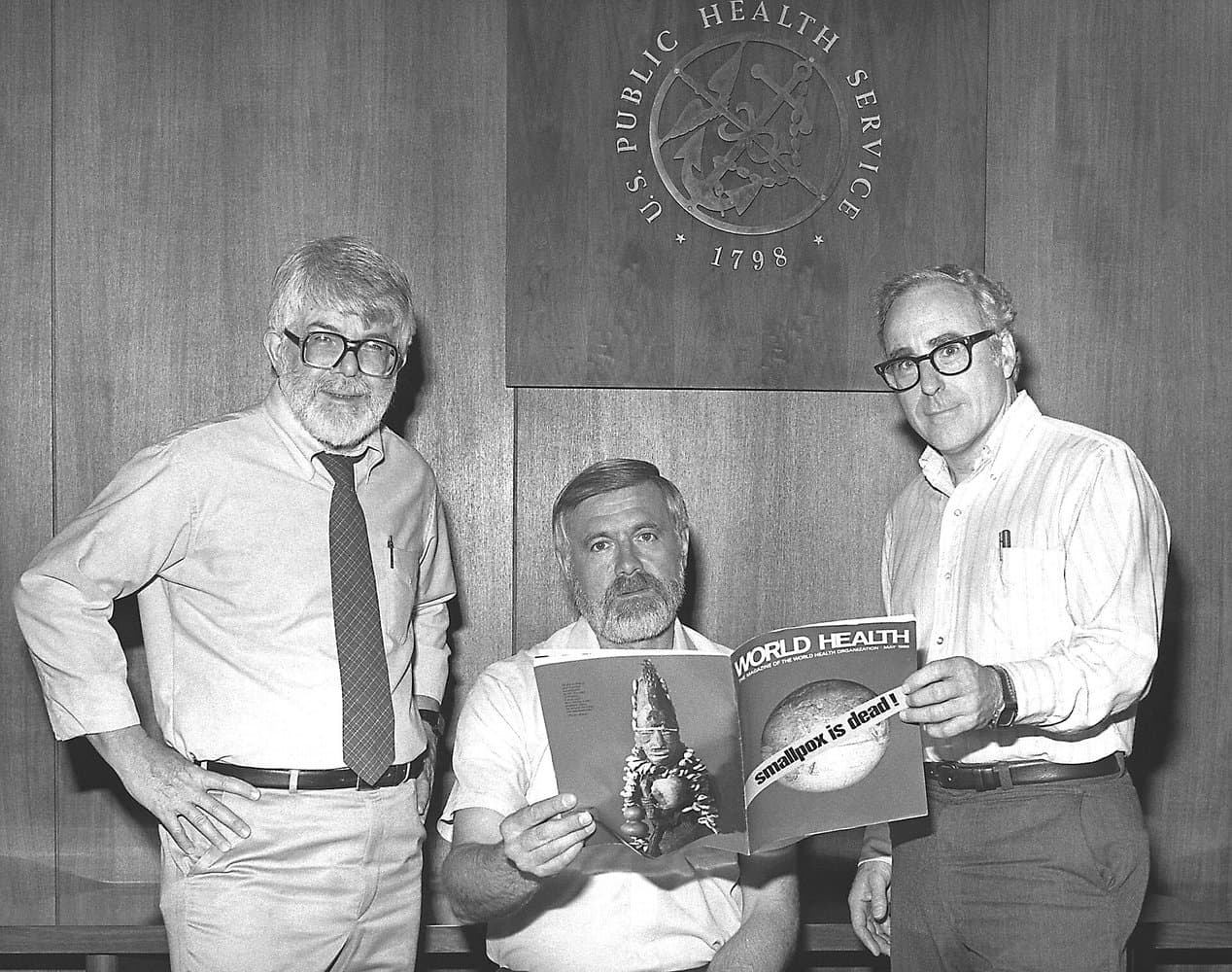
Three former directors of the smallpox eradication program reading the announcement of eradication, 1980
CDC (public domain)
From Jenner to Eradication
1796—Jenner
Jenner vaccinates James Phipps
Two Freezers, and an Open-Access Genome
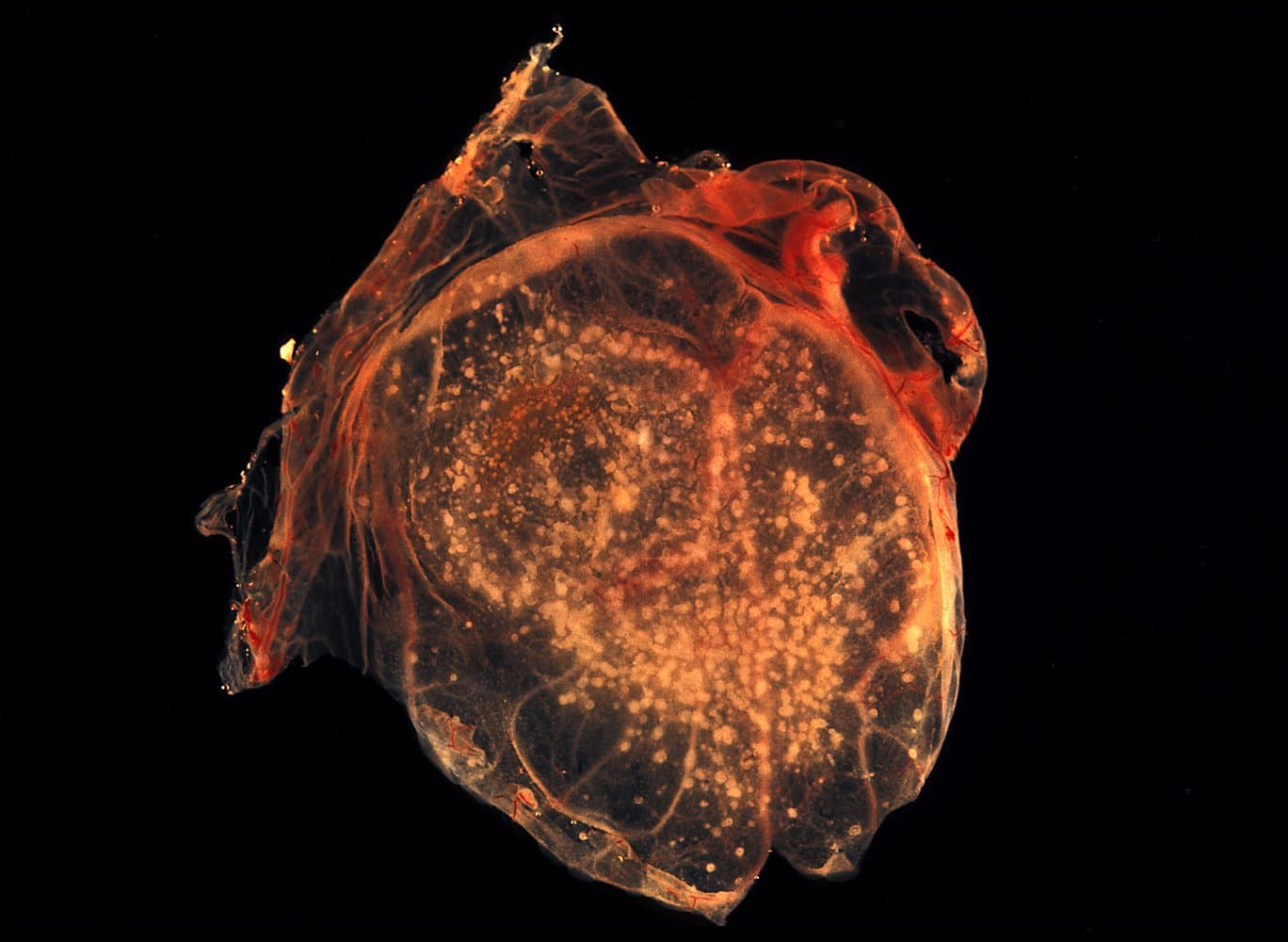
Smallpox lesions on the chorioallantoic membrane of a chick embryo (1967)
CDC, public domain
After the tragedy in Birmingham, laboratories holding smallpox destroyed or transferred their stocks. The virus that could only live in a human body now survives only frozen: since the end of 1983, only two state BSL-4 sanctuaries officially keep it, the CDC in Atlanta and the Vector center in Koltsovo, near Novosibirsk, where the Russian stocks were transferred from Moscow in 1994.
France destroyed its own in 1978: the National Health Laboratory was the only one in the country to hold the virus. The law of July 2, 1979, suspended primary vaccination but kept the boosters; it took the law of May 30, 1984, for the last obligations to fall. Since Vannes, smallpox had not touched France again; the vaccine, though, was still claiming victims: more than one hundred cases of serious encephalitis after vaccinations given from 1948 to 1978 were reported to the Ministry of Health, and Inserm attributed two deaths to the vaccine for the 400,000 primary vaccinations of 1975. The law still allows the obligation to be restored in the event of a threat; in 2005, the ministry declared 72 million doses in reserve.
Should they be destroyed, sealing the species' extinction? The debate has lasted more than forty years: for advocates of destruction, the risk of leakage or theft outweighs any scientific benefit; Washington and Moscow refuse, arguing that live virus is required to test next-generation antivirals and vaccines.
The only official stocks since late 1983. But the genome is freely accessible: in 2017, a cousin, horsepox, was recreated for about 100,000 dollars
The debate is aging, because synthetic biology has changed the question. The complete DNA sequence of the virus is digitized and freely accessible in genetic databases. In 2017, a Canadian team led by David Evans at the University of Alberta reconstructed a close cousin, horsepox virus, from DNA fragments ordered from a company, the way one orders spare parts—a result that chilled biosecurity agencies. The biological extinction of a virus is no longer irreversible: one cannot un-invent a known genetic sequence.
The Race Is Not Over
Foege's method, for its part, outlived its enemy: in 2015 in Guinea, ring vaccination was used to test the first effective Ebola vaccine.
And the vacant niche found a taker. Following the 1980 eradication and the end of smallpox vaccination worldwide, notes the WHO, mpox, its cousin, took hold in Central, East, and West Africa, before moving beyond the continent: more than one hundred and twenty countries affected, more than 100,000 confirmed cases, and more than 220 deaths among confirmed cases, between January 2022 and August 2024. It kills mostly children, pregnant women, and people with weakened immune systems.
Science and human will erased smallpox from the biosphere: no biological fate, then, is invincible, but forgetting remains the shortest road to resurgence