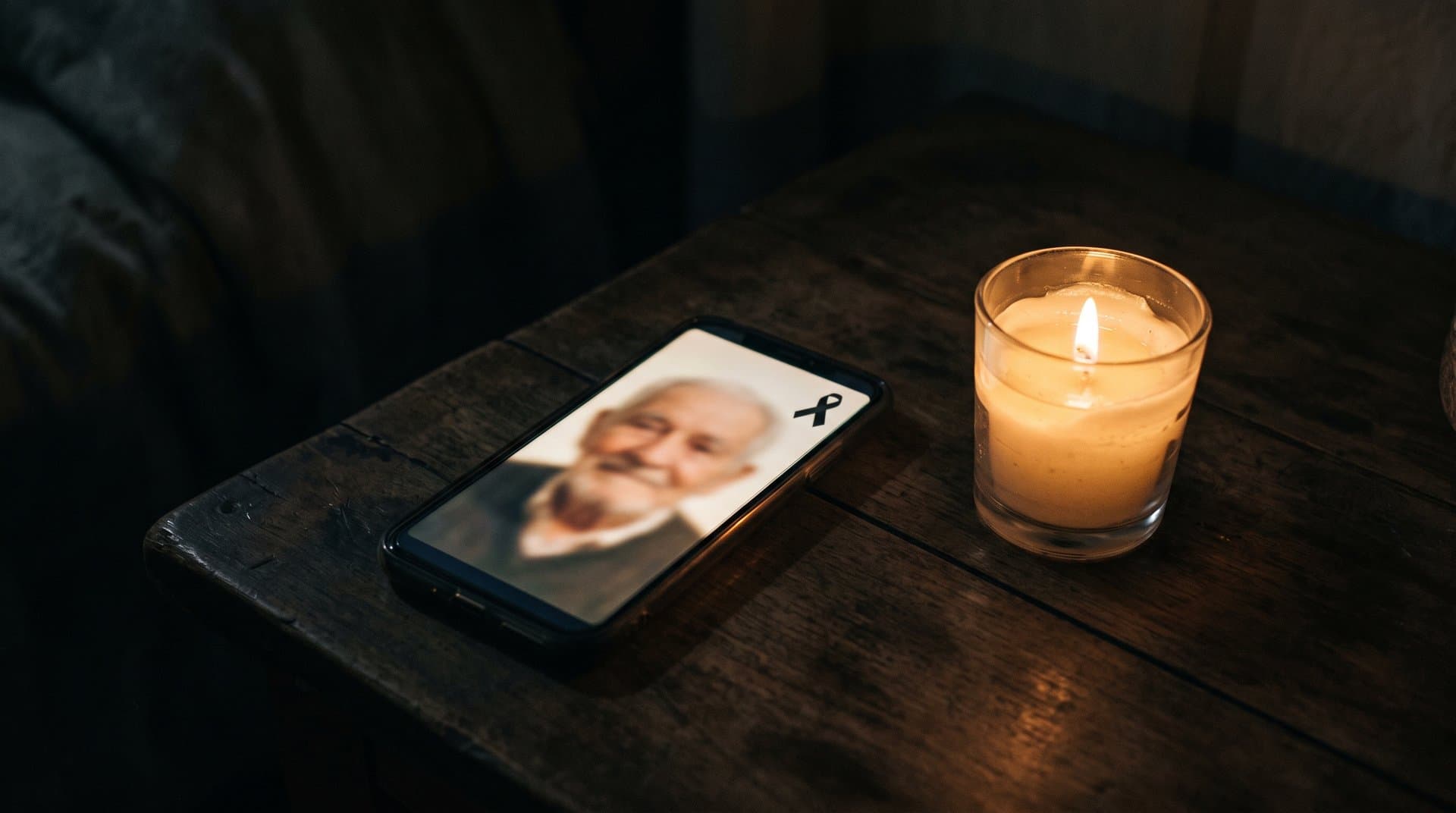
One morning, Facebook invites you to wish a friend a happy birthday. The friend is dead. Nobody notified the machine, so it does what it was trained to do: it follows up. Meta, Facebook's parent company, acknowledged it in 2019: until an account has been reported as belonging to someone who has passed away, the company relies on artificial intelligence to keep it from sending friends a birthday reminder, or suggesting they invite that person to an event.
A network built so the living could talk to one another has become, without anyone deciding it, a planet-wide registry of the dead. How many does it hold? Meta does not publish the figure. Researchers therefore ran the calculation, and their answer to the title's question fits into a single sentence: yes—around 2070 if the living stop signing up, or in the following century if they keep pouring in.
The Dead Only Win If the Living Walk Away
In 2019, Carl Öhman and David Watson, of the Oxford Internet Institute, crossed UN mortality projections with Facebook's user base, country by country and age by age. They set two boundary scenarios. In the first, nobody new signs up after 2018: the dead overtake the living in roughly fifty years, and between 2018 and 2100 some 1.4 billion users die—98% of the 1.43 billion users in Facebook's 2018 dataset. The network ends up like a retirement home where the last resident turns off the lights.
In the second, Facebook grows by 13% a year until everyone on Earth is on it. The dead are far more numerous there—4.9 billion by 2100—and yet they do not catch up with the living until the following century. That is the paradox of this graveyard: every new sign-up is a future dead person, yet as long as new ones keep arriving, the tipping point recedes.
The floor scenario, for its part, has already been disproven. Facebook had 2.32 billion monthly active users as of December 31, 2018, and 3.07 billion as of December 31, 2023, its last published figure: sign-ups did not stop in 2018; they added three-quarters of a billion users in five years. Growth was slowing, however, to 3% over the final year. That counter is not the same as the study's, which started from the 1.43 billion profiles in its dataset, nor is it a count of human beings: Meta itself estimated at the end of 2023 that roughly 10% of those accounts were duplicates and 4% were false.
The authors consider both scenarios implausible; the truth lies somewhere in between. It will be hard to verify: since 2024, Meta no longer even reports the number of active Facebook users in its financial filings. Neither the living nor the dead are counted there anymore.
| Scenario (Öhman and Watson, 2019) | Assumption | Dead profiles in 2100 | The dead overtake the living |
|---|---|---|---|
| The floor | No new sign-ups after 2018 | 1.4 billion | In roughly fifty years, around 2070 |
| The ceiling | +13% users per year until saturation | 4.9 billion | Not before the first decades of the twenty-second century |
More than twenty-nine million that year, nearly eighty thousand a day; after that the pace slows, for lack of candidates
They Will Die Indian, Indonesian, Nigerian
The typical dead Facebook user is neither Californian nor Parisian. Under the floor scenario, Asia accounts for nearly 44% of deceased profiles in 2100, and India and Indonesia alone make up nearly half of those Asian profiles. The United States comes in second behind India, because such a large share of the country is already signed up.
Under the ceiling scenario, if the network keeps growing, the map shifts toward Africa. Nigeria becomes the second-largest country for Facebook deaths, Niger, Mali, and Burkina Faso enter the top ten, and the United States remains the only Western nation on the list. Most of those dead will have lived very far from Menlo Park, where the rules of their digital afterlife are written.
Dead profiles on Facebook in 2100, ceiling scenario (Öhman and Watson, 2019)
millionsA Cemetery Where the Dead Walk Out
In a stone cemetery, the dead stay in their place. You have to walk to them, pass through a gate, look for the row; over the years, rain wears down the marble and moss covers the names. On Facebook, it is the dead person who comes to you: Memories resurfaces their vacation photo between two ads on a morning when you least expected it.
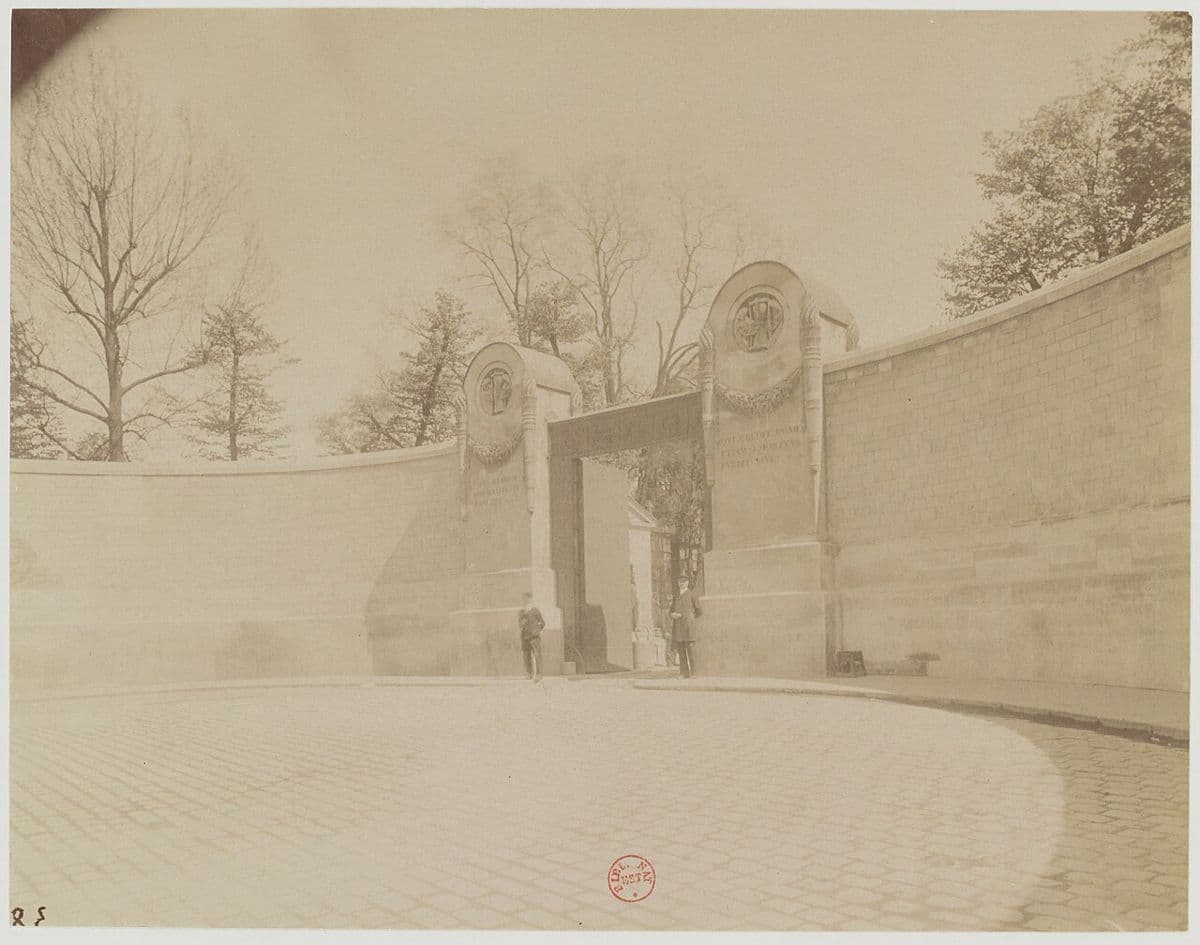
The entrance gate of Père-Lachaise Cemetery in Paris, between its high curved walls, photographed by Eugène Atget around 1898–1901
Gallica (BnF), public domain
And they receive visitors. According to Meta, more than thirty million people view memorialized profiles every month. Even dead, the internet user keeps the attention economy spinning: capitalism has finally abolished retirement.
The Keys Stay in California
Since 2015, starting in the United States, Facebook has allowed users to name a "legacy contact" during their lifetime. Once a death is reported, the account is memorialized and the word "Remembering" appears next to the person's name. The legacy contact can pin a tribute post, change the profile photo, respond to new friend requests, and—if the deceased gave permission—download their photos and posts. They cannot log in as the deceased or read their private messages: those who wrote to the person, Meta explains, expected their messages to remain private.
In Germany, a pair of parents challenged that locked door. Their daughter had died at age fifteen in 2012, in a subway accident whose circumstances remained unexplained, and they wanted to understand what had happened. By the time her mother tried to log in, Facebook had already put the profile into memorialized status. On July 12, 2018, the Federal Court of Justice ruled in their favor: the account passes to the heirs, just as a diary and personal letters are inherited.
In France, since 2016, anyone may leave instructions governing what happens to their data after death; without them, heirs may have accounts closed. As long as nobody acts, notes the French data protection authority (CNIL), "profiles remain online." The GDPR, Europe's data protection regulation, does not apply to the dead.
A Memory of the Species, Held by an Ad Broker
For Öhman and Watson, these profiles are becoming part of "our collective record as a species." Yet they belong to a company that holds both the legal rights and the servers, and has little incentive to share. Those who would need them—historians and future generations—can neither speak up nor pay.
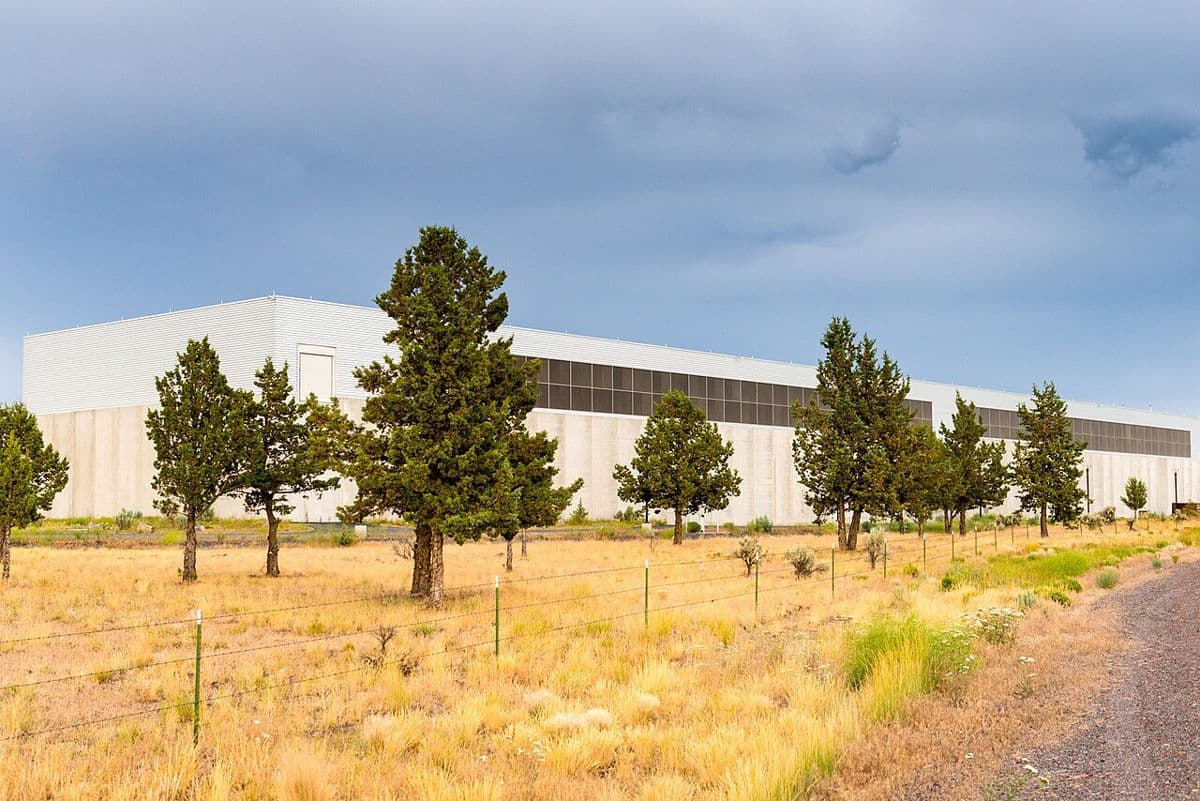
Facebook's data center in Prineville, Oregon, a long windowless building along Highway 126, in 2014
Gary Halvorson, Oregon State Archives, CC BY 4.0
A private archive can be lost. In March 2019, MySpace notified its members that after a server migration, photos, videos, and audio files uploaded more than three years earlier—twelve years' worth of uploads—might no longer be available. Andy Baio, who helped build Kickstarter, estimated the loss at fifty million tracks from fourteen million artists. Twelve years of music vanished without rain, without moss, and without a funeral.
It can also be put to other uses. In 2025, Meta announced that it would train its artificial intelligence models on public posts and comments shared by adult users in Europe; its announcement said nothing about those who have died. Our great-grandparents left letters in an attic. We leave our memories to a publicly traded advertising company, and nobody knows how long it will keep them.
Facebook is already a cemetery; the dead will only become the majority the day the living grow tired of it